A turtleneck can be a quiet layer beneath a jacket or the main event of an outfit. Problems start when a thick, roomy sweater is asked to behave like a thin top. Before changing the trousers, decide which job this particular knit can comfortably do.
Give the sleeves somewhere to go
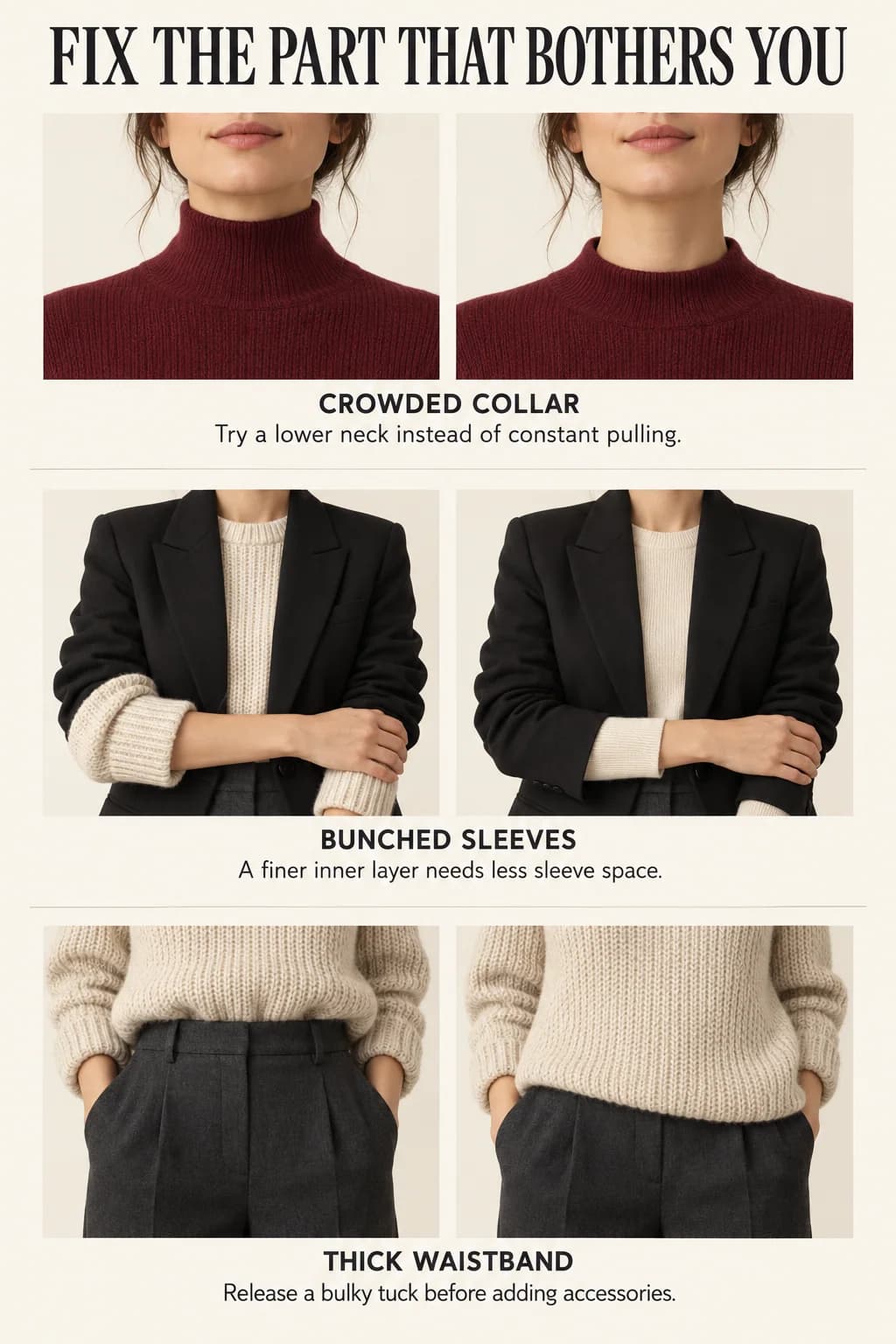
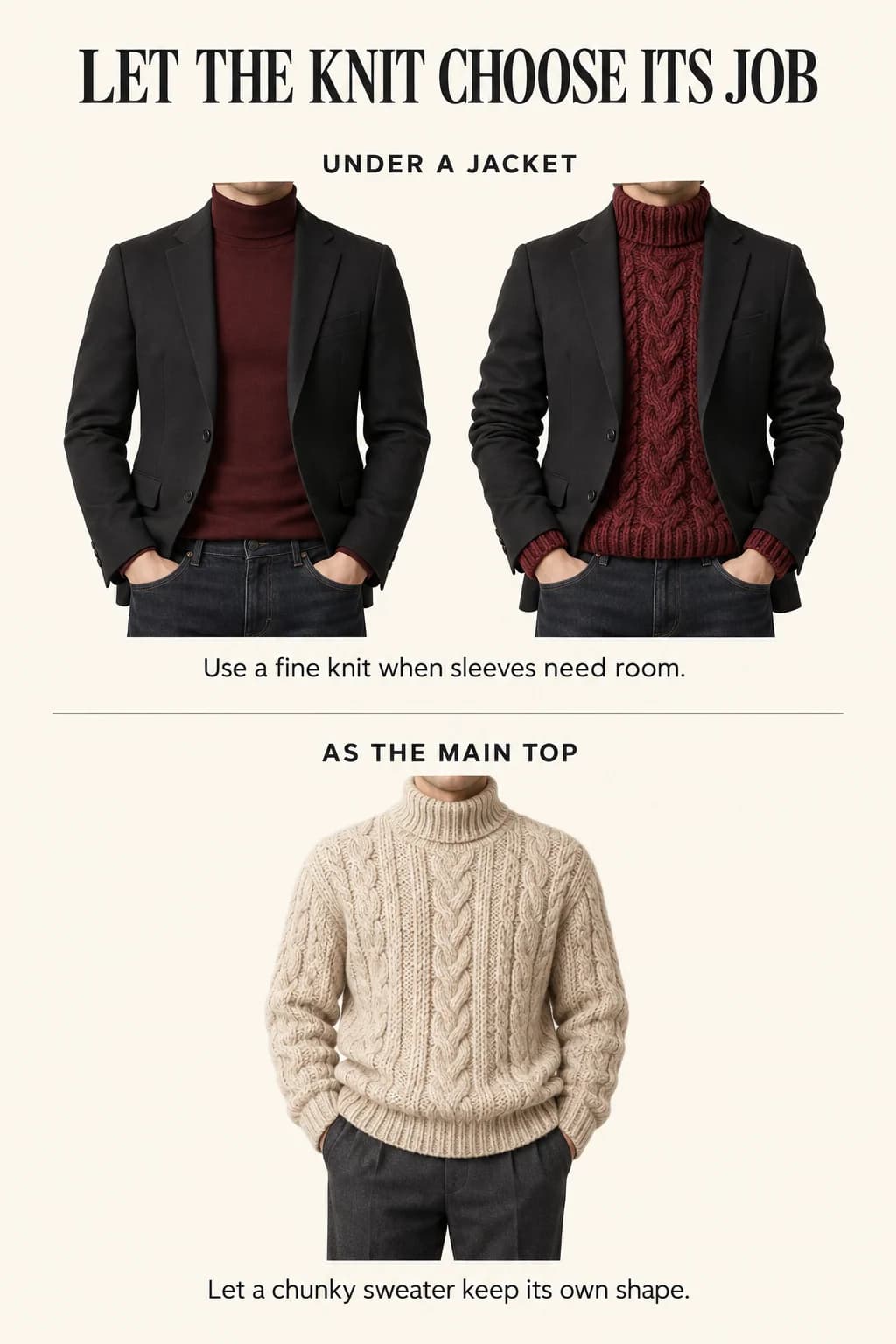
Put the turtleneck under the layer you intend to wear, then reach forward as if picking up a bag. The sleeve should move without dragging the jacket with it. If the upper arms feel crowded or the shoulder seam lifts, compare a finer knit with the same jacket. A larger jacket is another option, but only if you also like its overall fit.
A fine, relatively smooth turtleneck usually makes the easiest starting point under a shirt, blazer or close-fitting coat. A chunky cable knit creates a different outline. Let it sit outside the rest of the outfit, with a coat roomy enough to cover it, rather than squeezing it beneath fitted tailoring. Neither thickness is inherently more dressed up. The surrounding pieces decide that.
Check the collar separately. Fold a long neck once where it sits comfortably, keeping the fold even rather than rolling a thick ring under your chin. If it presses or needs constant rearranging, a lower mock neck may suit you better. The label on the garment does not outrank your ability to turn your head.
Three outfits, built around three different knits
A fine burgundy top beneath an open blue shirt
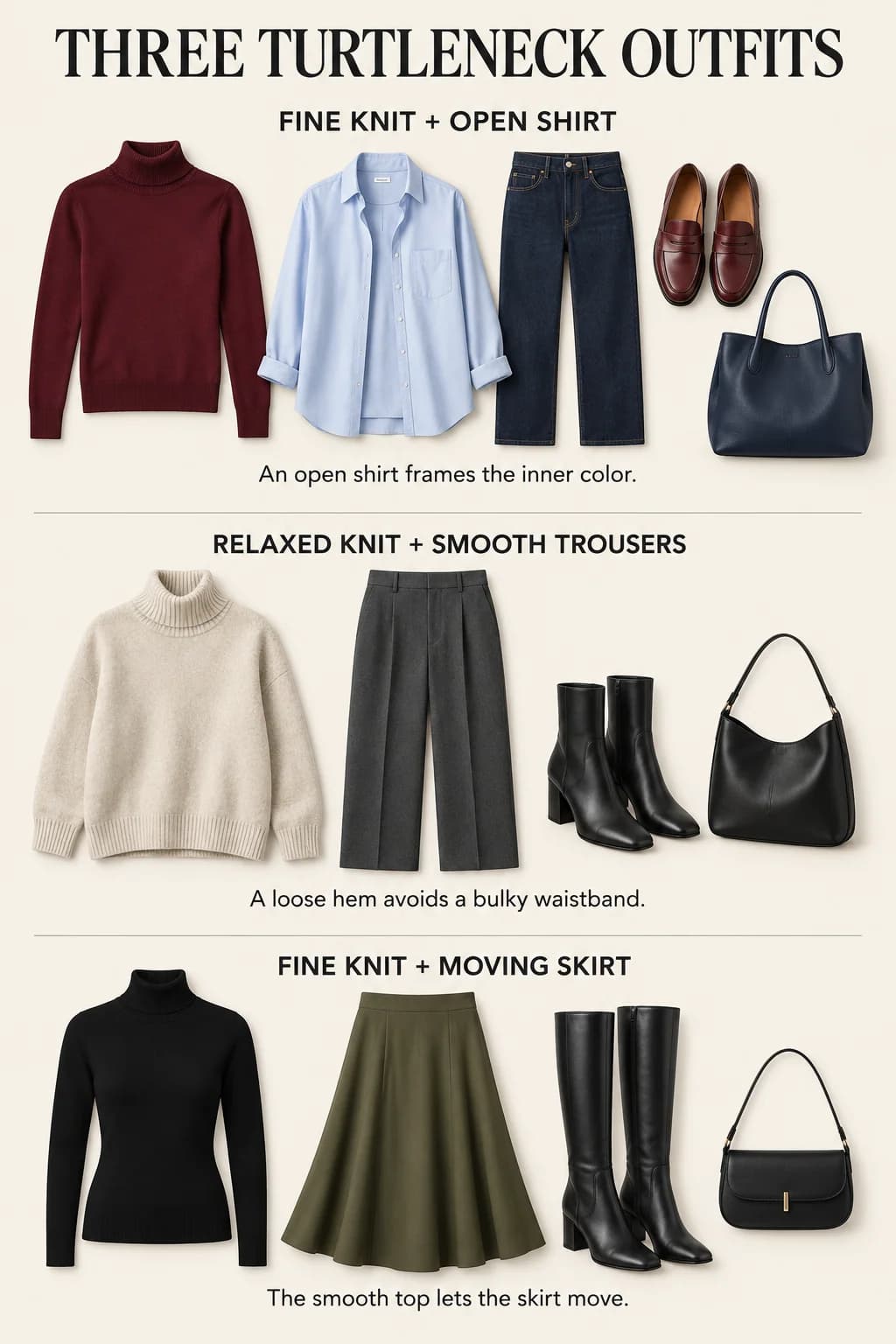
For a cool morning of errands followed by lunch, start with a fine burgundy turtleneck, a roomy pale-blue button-down, dark straight jeans and burgundy loafers. Wear the shirt open, with its cuffs fastened or neatly turned back. Its vertical opening shows the inner color while leaving the shirt collar away from the neck.
The loafers repeat the burgundy in a small area, so the inner layer belongs to the whole outfit rather than appearing only as a strip beneath the face. Keep the jeans dark and uncomplicated: the interesting part is the blue around the burgundy. An unstructured navy bag can join the denim without adding another competing color.
If the day warms up, remove the shirt and wear the turtleneck on its own. If two shirt-length hems feel untidy, tuck only the fine inner top and leave the blue shirt loose. Avoid tucking both automatically. The guide to styling a white button-down offers more ways to use an open shirt as an outer layer; the same decisions apply to this blue one.
An oatmeal sweater with charcoal trousers
Choose a relaxed oatmeal turtleneck with a hem that ends around the upper hip, charcoal straight trousers and black ankle boots for a casual dinner or a dry afternoon out. Wear the sweater loose initially. A smooth trouser front gives the ribbed hem a surface to settle against, while the darker lower half makes the sweater's texture easy to see.
This outfit does not require a bare ankle or a visibly tucked waist. Let the trouser hem fall over the boot shaft without catching on it. A black bag repeats the shoes; simple earrings leave the sweater collar as the main detail near the face. Add a roomy charcoal coat if needed, checking the sleeves with the sweater already on.
For a looser outline, use wide trousers but keep enough of the shoe visible to judge where the hem finishes. For a shorter sweater, choose a trouser rise that still gives comfortable coverage when you reach. If the knit is too bulky to tuck, the answer can simply be to leave it out. Our sweater-tucking guide explains when a small tuck helps and when it creates another problem.
A fitted black knit with an olive skirt
For dinner when you want something softer than tailoring, pair a fine black turtleneck with an olive A-line midi skirt, black knee-high boots and a small black bag. The top follows the torso without needing to be tight; the skirt supplies movement below it. Tuck the thin hem smoothly only if the waistband allows it without ridges.
Here the black boots relate to the top while the olive skirt remains a distinct block between them. A cropped black jacket can finish near the waist without hiding the skirt's shape. If you prefer an untucked top, try a shorter knit that ends above the skirt's widest area instead of folding a long one into a thick band.
Adapt the outfit to mild weather with black flats and a lightweight mock-neck top. For colder conditions, add tights and a suitable coat; a high neckline alone is not a winter clothing system. The outfit works because the pieces have different jobs, not because any one silhouette is compulsory.
Leave breathing room around a high neckline
An open jacket or shirt makes a frame around the solid inner top. A wider opening reveals more of the turtleneck; a narrow opening shows mainly the collar. Neither needs a necklace to fill the remaining space. Look at the complete neckline before adding jewelry, especially when the outer layer already has buttons, lapels or a strong pattern.
If you want a pendant, try it where it lies smoothly against the knit rather than catching on the folded collar. Earrings can provide a smaller point of interest without another line across the chest. These are visual choices, not rules about neck length or body type. The useful question is whether you can see the detail you wanted to add.
A very dark knit beside a dark coat can read as one broad area. Keep that if you like the uninterrupted effect. To show the layers more clearly, change the outer color or texture before adding extra accessories. A pale-blue shirt around burgundy does this more directly than three necklaces would.
When the outfit keeps needing adjustment
A collar that collapses unevenly may simply be too tall for the position you want. Try one clean fold; if it still crowds your chin, use a shorter neckline. Do not pull the whole sweater down repeatedly to solve a collar problem.
If sleeves bunch beneath a jacket, remove that layer and see whether the knit settles by itself. That separates a sleeve-clearance issue from a poor-fitting top. If the waistband looks thick, release the tuck and compare the side view. Tucking a smaller area may help a fine knit; it rarely makes a heavy cable sweater disappear.
For warm interiors, build the outfit so the turtleneck can stand alone when the coat comes off. Choose a lighter knit or a mock neck if you dislike heat at the throat. Keep the color relationship you like, but change the garment that is making the day uncomfortable.