You can change a striped sweater outfit without changing the sweater. A cream-and-navy knit looks graphic with dark trousers, softer with a cream skirt and casual with blue jeans. Start by deciding which of its colors you want the rest of the outfit to repeat.
Borrow a color, rather than adding a theme
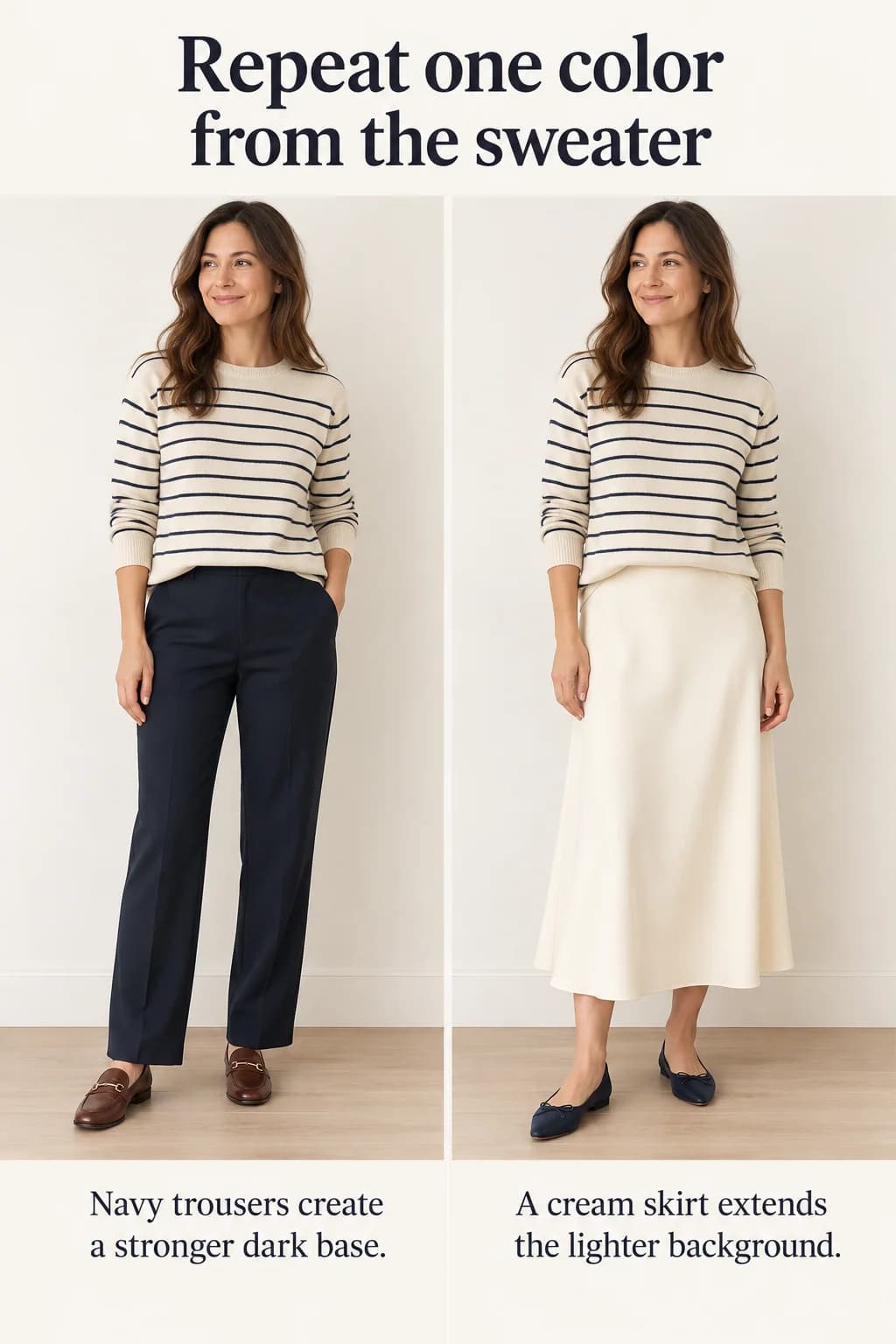
Look at the sweater from a few steps away. Is it mostly a light background with narrow dark lines, or does the dark color occupy as much space as the light? A mostly cream sweater contributes a large light area even though it contains navy. Repeating navy in the trousers will give it a different balance from repeating cream.
Broad, high-contrast stripes are more visually emphatic than fine, low-contrast ones. That does not make one more suitable for a particular body size. Choose the pattern you enjoy, then decide how much additional pattern and contrast you want around it. A striped sweater does not require nautical buttons, a neck scarf and a matching hat to explain itself.
If the sweater has several colors, pick one for the largest supporting piece. A rust, navy and cream knit might work with navy trousers and brown shoes. You can leave rust entirely within the sweater. Repeating every stripe color in a different accessory often makes dressing harder without making the outfit clearer.
Jeans are useful; the hem is the decision
For a weekend coffee and walk, wear a cream-and-navy striped sweater with medium-blue straight jeans and brown loafers. A brown crossbody bag relates to the footwear. Keep the knit loose if its lower edge rests comfortably near the upper hip; this leaves the jeans leg visible while preserving the stripe pattern across the front.
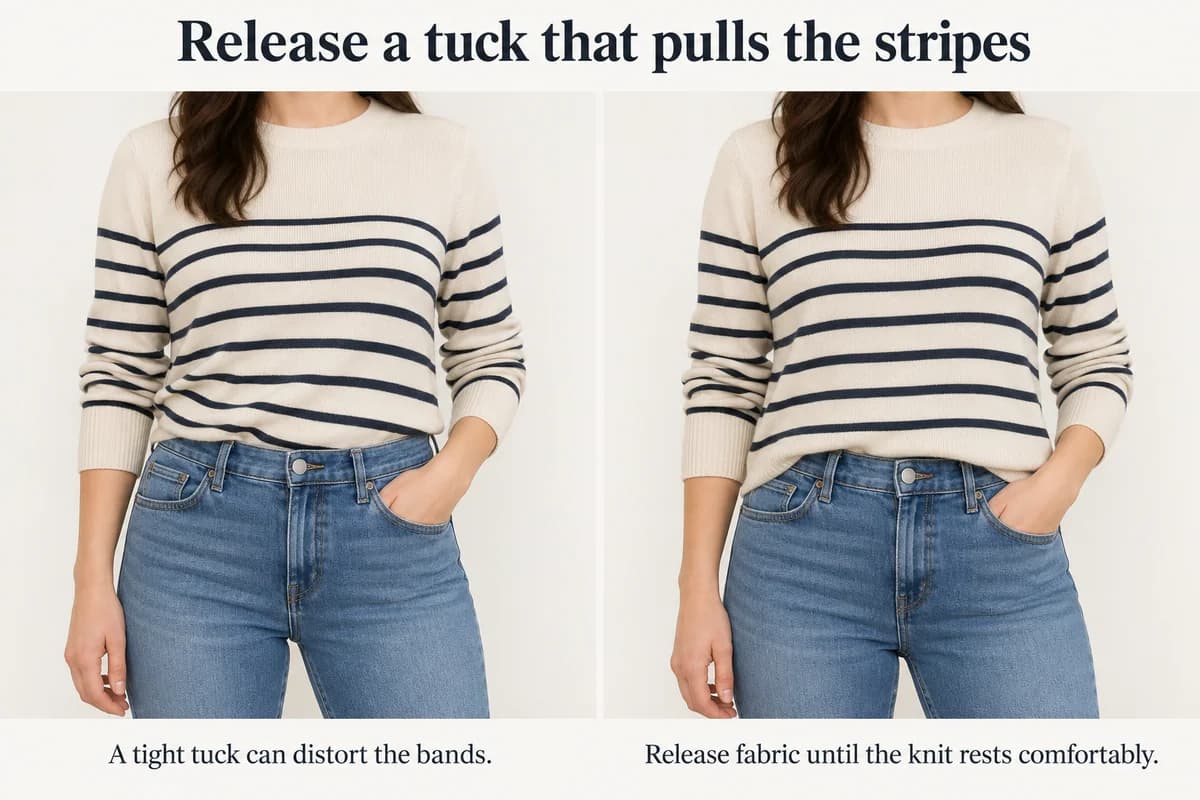
If the sweater is thin and long, a small front tuck can reveal the fastening. Look at the stripes after tucking. A tight diagonal pull across the stomach is a sign to release more fabric, not a reason to keep adjusting your posture. A tuck should not make the lower bands stretch into a pattern you dislike.
For more walking, substitute cream sneakers. For cold weather, use brown ankle boots and socks, checking that the jeans settle over the shaft rather than stacking against it. A roomy, plain coat can sit over the sweater; if its sleeves are narrow, choose a finer striped knit instead of trying to compress thick sleeves all morning.
Let a skirt supply a different surface
A navy sweater with fine cream stripes, a cream satin midi skirt and navy flats makes a useful lunch or informal dinner outfit. The mostly dark knit connects to the shoes, while the skirt supplies a large light, smooth area. The contrast comes from surface and color rather than a collection of extra accessories.
Try a sweater whose hem meets the skirt waistband without being forced inside. If you use a tuck, check the skirt from the side: a fine satin fabric may reveal the folded knit underneath. Leaving a short sweater loose often preserves the skirt's fall. A longer loose sweater creates a softer, less waist-defined shape, which can be the choice you prefer.
If the cream skirt feels too delicate for the day's plans, keep the same color idea with a more substantial woven skirt. In cooler weather, dark boots under the midi hem add coverage; confirm the skirt slides over them when you sit and stand. A small navy bag keeps the dark repeat limited. For further ways to change the dressiness of this piece, see styling a satin skirt casually.
Tailored trousers, with the pattern inside a solid frame
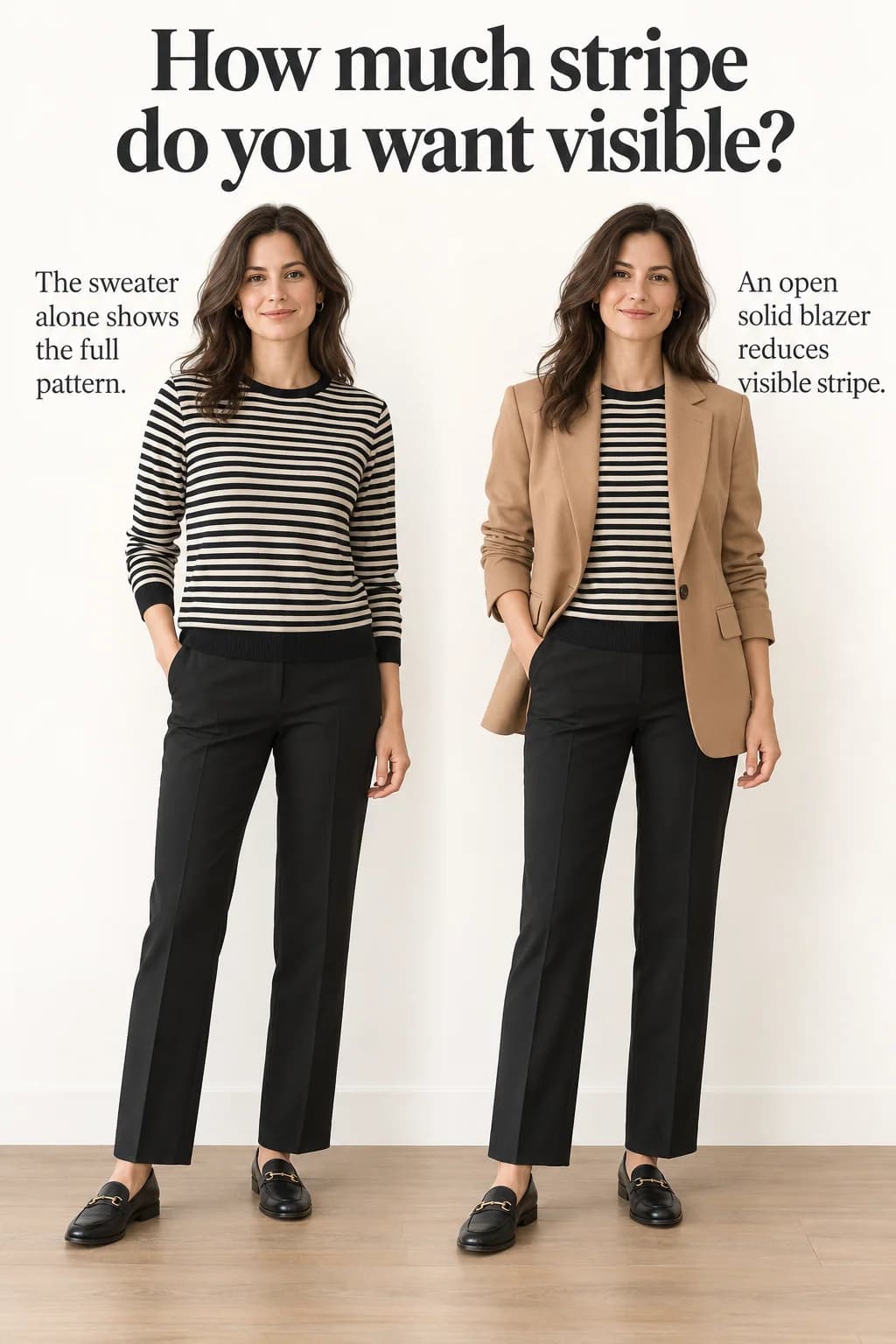
For an informal meeting, wear a fine black-and-cream striped crew-neck sweater with black straight trousers, black loafers and an open camel blazer. The solid blazer interrupts the stripe area at each side, so less of the pattern is visible. Keep its sleeves roomy enough for the sweater to move without dragging the blazer.
The same sweater and trousers without the blazer make a stronger graphic statement. Neither version is inherently more flattering; they simply show different amounts of pattern. Close the blazer if you need to, then reassess the remaining strip of sweater rather than relying on the open version you saw in the mirror.
For a warmer room, make sure the striped knit and trousers form an outfit you like on their own. For greater coverage at the waist, leave a smooth sweater untucked under the blazer. A high-neck striped sweater may need no necklace at all; small earrings can provide detail without creating another shape across the lines.
When you want a second print
Begin with one small addition, such as a patterned bag, while keeping the trousers and shoes plain. Compare how strong the new print looks beside the stripes. A tiny motif can still be loud if its colors contrast sharply; a large motif can be quiet if its colors are close.
Repeating one color between the prints can help them relate, but it is not a guarantee. If your attention jumps between two equally strong areas, try a quieter second print or reduce its area. The guide to mixing prints in an outfit goes deeper into that decision. There is no need to add a second print when the striped knit already gives you the interest you want.
Keep the stripes comfortable when you move
If lines curve sharply because the sweater is under tension, first release a tuck or remove the outer layer. If the distortion remains and the knit feels restrictive, compare a roomier cut. Some sweaters deliberately place curved or uneven stripes; the aim is not to make every line ruler-straight, but to distinguish the design from pulling caused by fit.
If a bulky ribbed hem makes a shelf above the waistband, let it fall outside or choose a shorter knit for that bottom. Folding several inches under may look tidy for a photograph yet need constant rebuilding in real life. Sit, stand and reach once before deciding. A striped sweater is useful precisely because the pattern supplies interest; the rest of the outfit can be simple enough to wear without supervising it.