A slip dress can change character quickly: an open cotton shirt makes it feel daytime, a tailored jacket gives it more structure, and a fine top underneath adds coverage. What changes less easily is the way the dress falls. If it is pulling or twisting before you layer it, the extra clothes will not make that disappear.
Let the dress settle before adding anything
Put on the undergarments you expect to wear and let the dress hang naturally. Check the neckline while sitting and leaning, then look at the fabric across the hips. The hem should not need a constant downward tug to return to its intended position. Adjust straps if the dress allows it, but stop if shortening them pulls the whole bodice upward or makes the armholes uncomfortable.
A slip silhouette does not tell you the fiber. Satin describes a fabric construction and surface effect, not a guarantee of silk. A matte dress and a shiny one can share the same shape, while different linings and weights change opacity and movement. Read the label and check the actual garment in the light where you will wear it.
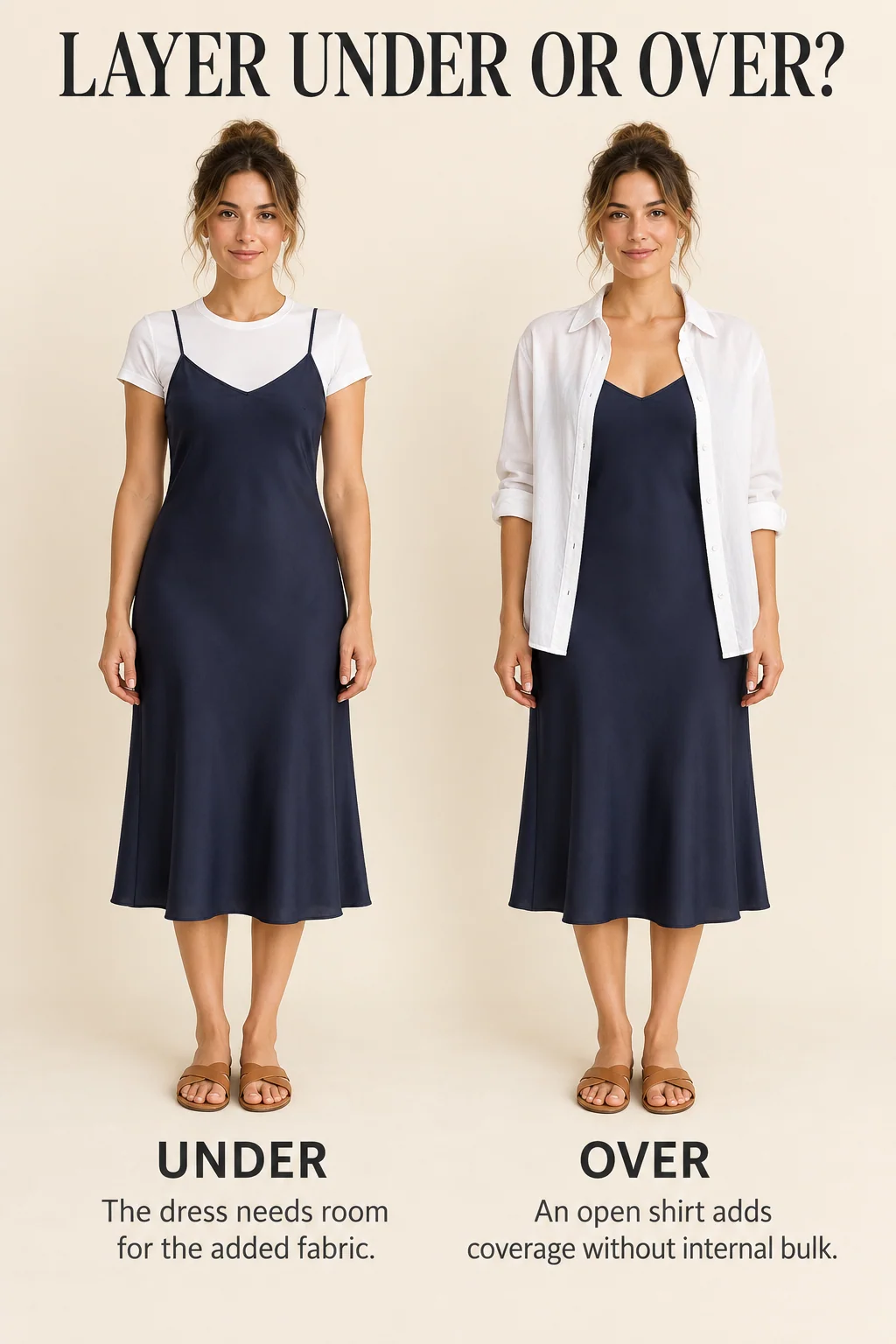
If you want more coverage, decide whether it should sit under or over the dress. An underlayer takes up room inside it. An outer shirt or jacket can add coverage without that extra internal bulk. A dress that already fits closely may be better with the second approach.
Daytime: a cotton shirt over a navy slip
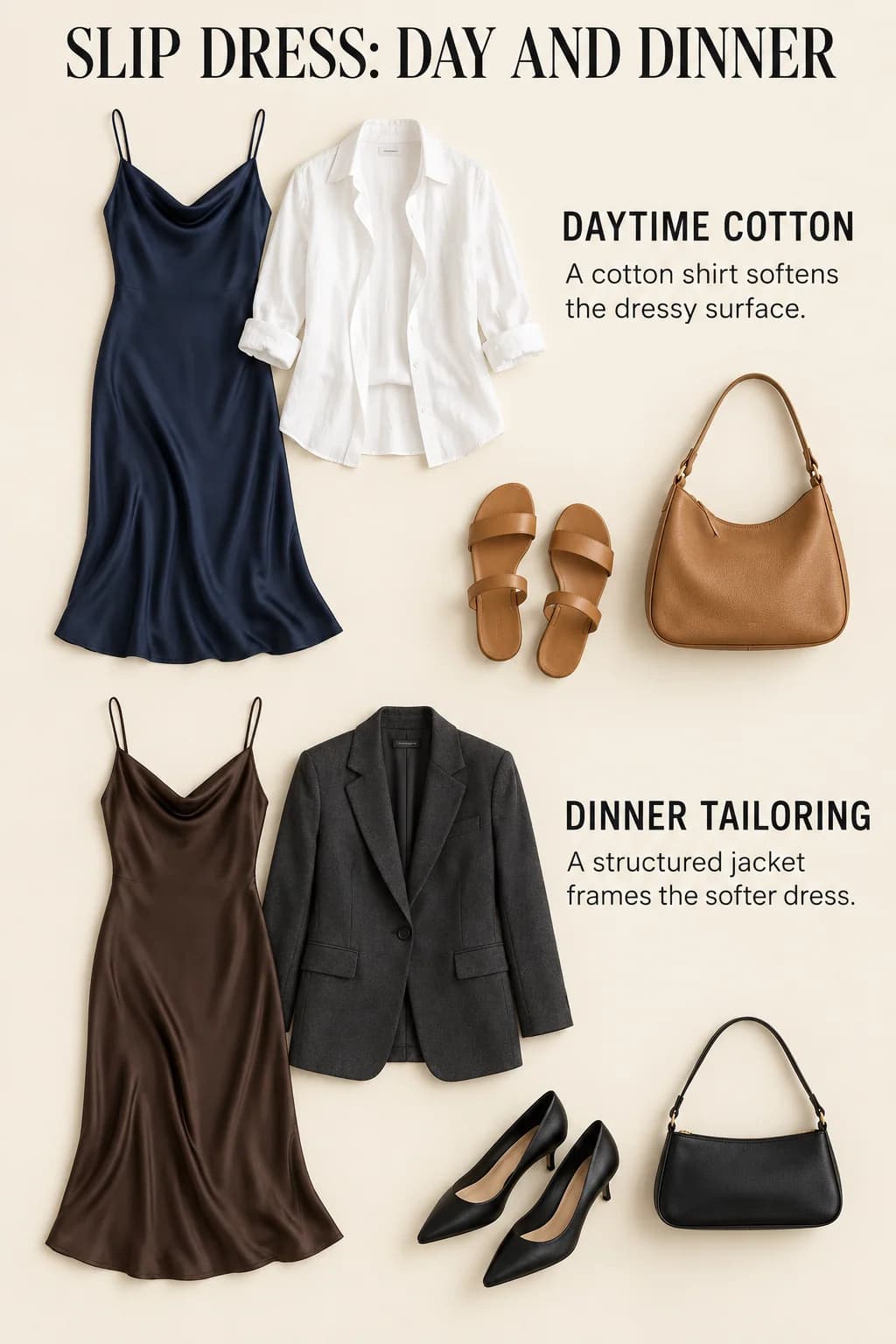
For a lunch date or gallery afternoon, wear a navy midi slip dress with an open white cotton shirt and tan flat sandals. Turn the shirt cuffs back only if they remain comfortable, and let the shirt hem fall loose. A tan shoulder bag relates to the shoes and leaves navy and white as the main contrast.
The cotton shirt introduces a less glossy surface and a familiar daytime shape. Leaving it open preserves the dress's vertical line. A shirt ending around the hip may be easier than a very long one if you want the skirt to remain visible; a longer shirt creates a looser, more covered version.
If you prefer the shirt closed, fasten the central buttons and inspect how its hem lies over the dress. There is no need to tie a tight knot that gathers the dress underneath. If the shirt makes the dress twist, loosen the closure or change to a roomier shirt. The layers should be able to move independently.
For a longer walking day, replace the sandals with cream sneakers you already know are comfortable. The dress needs to clear them without dragging. In cooler air, use an opaque navy dress and a more substantial cotton shirt rather than relying on a very sheer summer version to behave like autumn clothing. The casual satin-skirt guide explores a related change in finish when you are working with separates.
Dinner: add a jacket with its own shape
Take a chocolate slip dress, a charcoal tailored jacket and black low-heeled shoes to an informal dinner. A small black bag gives the shoes a companion without adding another color. The jacket's shoulder and lapels provide structure around the softer dress; the darker palette keeps that contrast restrained.
Choose a jacket that you can wear comfortably closed even if you plan to leave it open. With the front open, check where the lower edge meets the dress. If it lands at a point where the skirt begins to flare, the jacket may push the fabric outward. A shorter jacket or a straighter dress can change that relationship. Do not keep pinching the jacket backward to imitate a photograph.
Flat black shoes can replace the heels without changing the logic of the outfit. Recheck the dress length, since a hem that cleared the floor in heels may not clear it now. For more chest coverage, a suitable camisole under a dress with enough ease can fill the neckline; otherwise, choose a higher-neck dress or a closed outer layer. A bag held across the chest is not a useful coverage plan.
Diagnose the ridge before changing the whole outfit
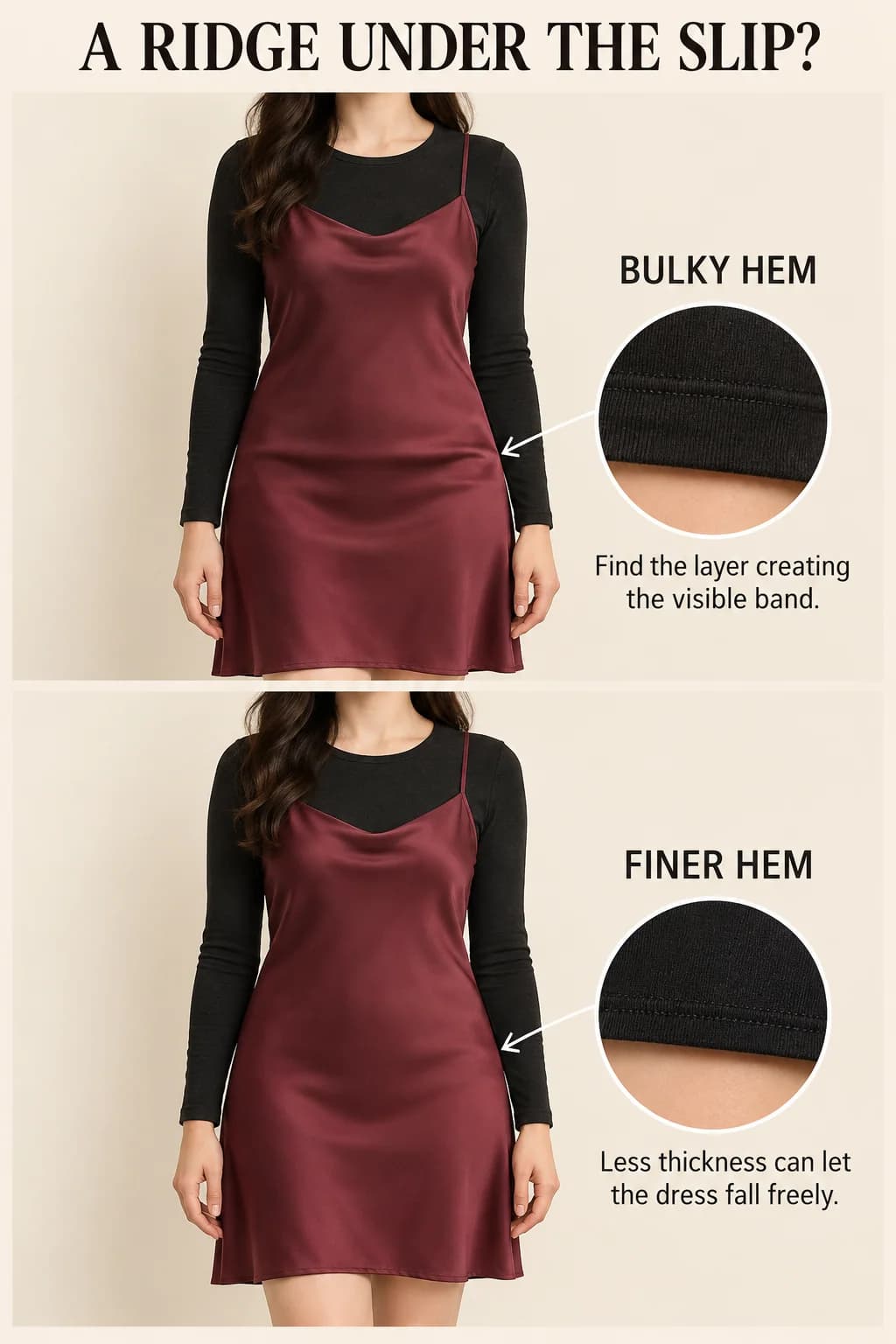
A visible band at the hips can come from an underlayer hem, a waistband or the dress itself pulling against the body. Remove one layer and see whether the band remains. If it disappears, change that layer's thickness or length. If it stays, examine the dress's fit rather than buying different accessories.
Twisting may begin with uneven straps or a garment caught on an underlayer. Settle the straps and release the caught fabric first. Persistent twisting or a rising hem can indicate that this cut does not have the room you need. Consider another size or shape; shortening the straps to hold everything up can create a different problem at the neckline.
Check opacity while seated as well as standing. An appropriate lining or slip can provide coverage when the dress has room for it, but a thick added layer can alter the drape you liked. If more coverage and the dress's close fit are incompatible, use an outer shirt or choose a more opaque dress. The useful outfit is the one that lets you sit, walk and take off your jacket without renegotiating the entire arrangement.
Cooler weather: a thin layer underneath, if there is room
Wear a burgundy slip dress over a fine black long-sleeve top, with black opaque tights and black ankle boots. Add a coat appropriate to the weather. The black underlayer creates a defined neckline and sleeves while the burgundy remains the main visible color. Keeping tights and boots dark makes the lower transition quieter.
Use a smooth, close-fitting top that is comfortable rather than compressive. After putting on the dress, smooth the top's sleeves and body, then sit and raise your arms. If the top's lower hem makes a ring across the dress, a shorter or finer layer may help. If the whole dress becomes tight across the bust or hips, it needs more room; smoothing harder will not create it.
This is different from adding a sweater over the dress, which changes the upper outline entirely. Here the dress remains visible from the neckline downward. A crew-neck top gives a simple edge; a fine mock neck gives more coverage but may feel crowded under a close coat collar.
If your slip dress cannot accommodate any underlayer, keep it over appropriate underwear and use a warm outer layer instead, or choose another dress for that day. A coat with a midi dress needs enough space through the sleeves and a hem relationship you like when it is closed. The slip does not have to perform every season's job.