The closet may have enough space for your coats and still be difficult to use. A shoe rack can sit where the longest coat needs to hang. A basket can fit on a shelf but be impossible to pull past the door frame. Organize the movements first: take out a coat, return it, find gloves and close the door.
Give the closet a working inventory
Remove one category at a time if emptying the whole closet would block your entryway. Separate coats worn now, occasional coats, shoes and small daily items. Count what actually needs to live here, including any space you want to leave for visitors. Do not assign every member of the household an equal number of hangers if their needs differ.
Move unrelated items only when you have a real alternative location. Shifting a vacuum cleaner into the hallway is not a storage solution. If this closet must hold cleaning equipment as well as coats, reserve a defined area for it and check that handles cannot catch clothing when removed.
The Container Store's hall-closet guidance begins with deciding what the closet is for. That matters especially in a small space: adding more containers to an unlimited list of uses usually makes access worse.
Before buying anything, hang the longest coat on its usual hanger. Measure from the rail to the coat's lowest point and look at how far its sleeves extend. Check the usable opening with the door fully open. The dimensions of the empty closet are less useful than the space remaining around the garments and door hardware.
A closet with long coats needs a clear drop
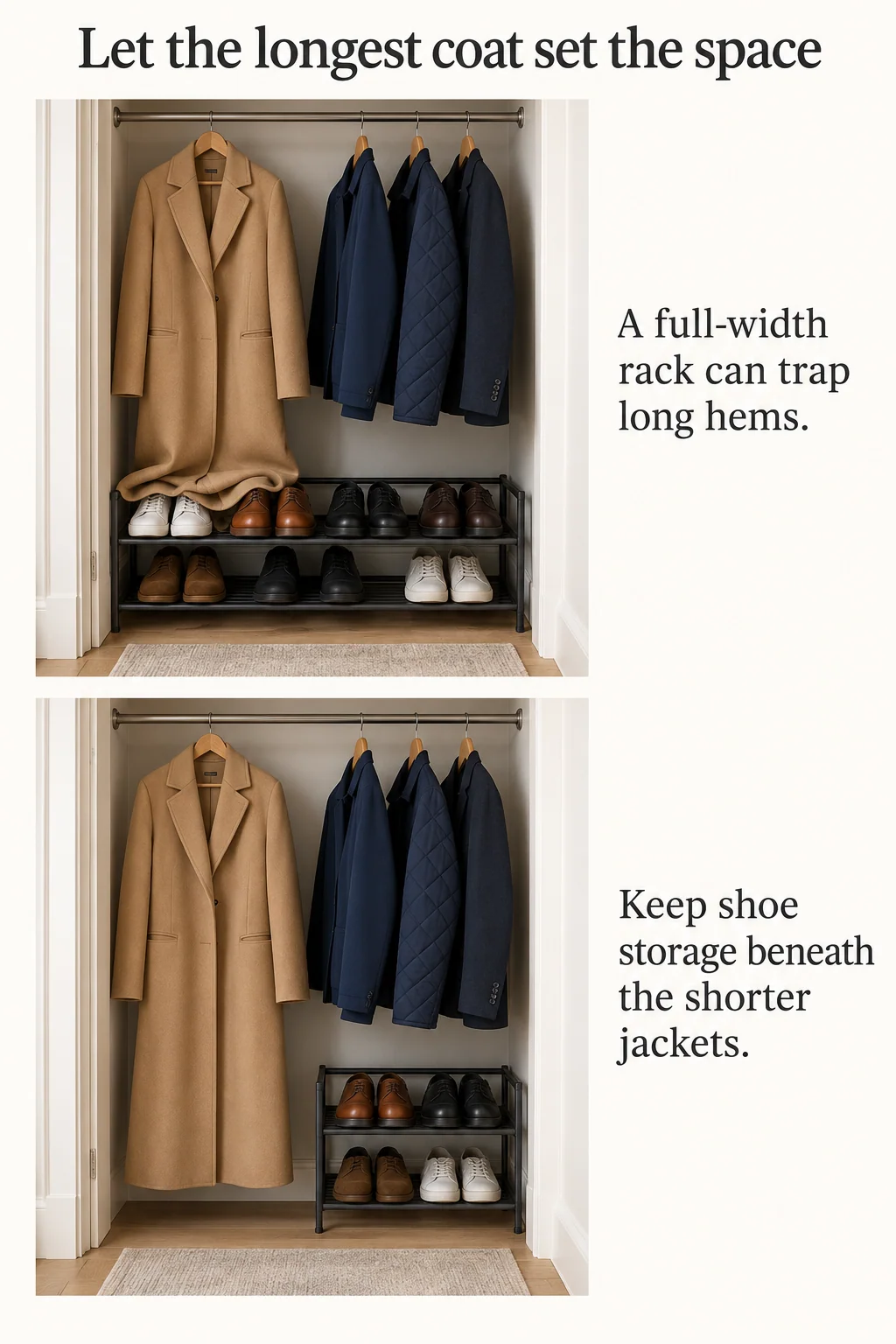
Imagine a narrow closet containing two long coats, several shorter jackets and a few pairs of daily shoes. Group the long coats at one end, leaving their hems clear of anything on the floor. Put a low shoe tray or suitable rack beneath the shorter jackets only if the garments remain above it when hanging naturally.
Do not spread a full-width shoe rack across the base just because it fits wall to wall. It can lift shoes into the coat hems and make the long coats fold or drag over dirty soles. A smaller rack in the short-hang area may store fewer pairs but make the whole closet easier to use. Keep less-used shoes elsewhere if a suitable location exists.
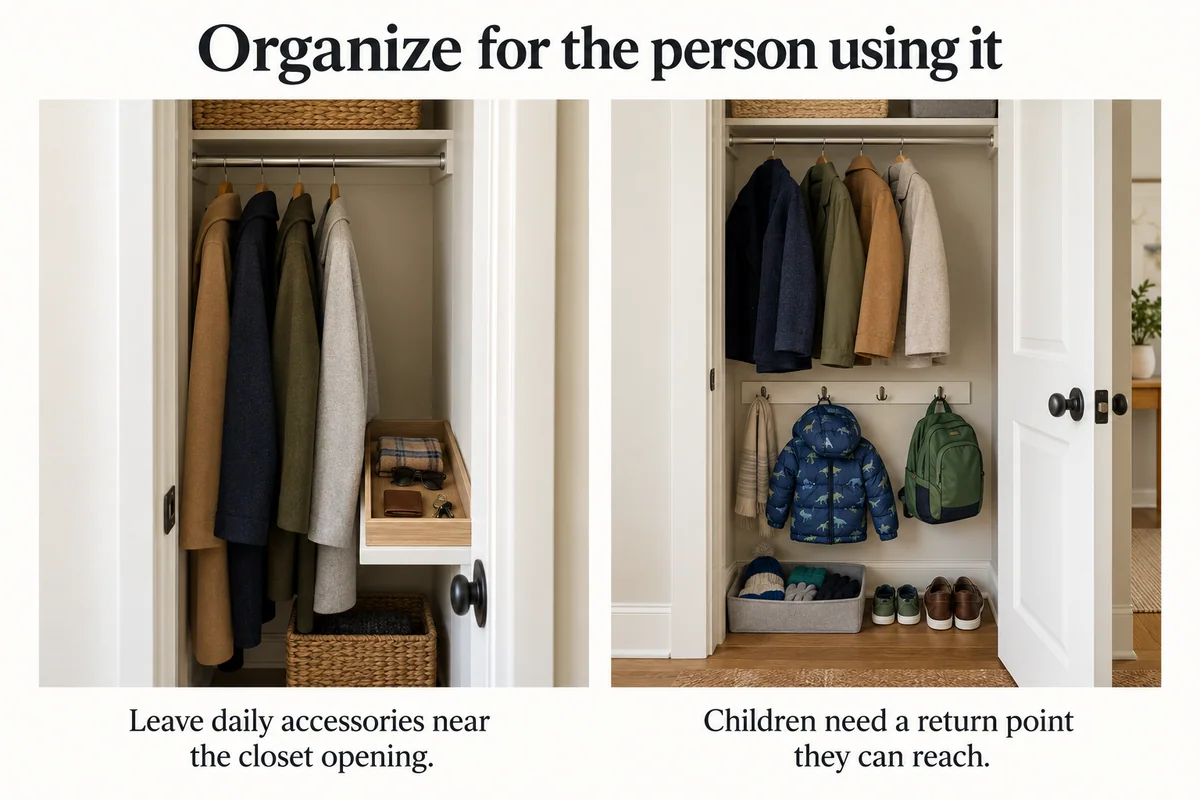
Place gloves and scarves in a shallow container that can be removed through the opening without taking down every coat. A single accessories bin may be sufficient for one or two adults. Fine divisions are helpful only when the household will put things back into them. If an item disappears at the bottom, reducing the bin's depth can work better than adding labels.
Leave a little practical separation between the coats so you can grasp a hanger. There is no universal count that fits a rail: a thick winter coat occupies more room than a light jacket. Load the rail with the real garments, then test removal and replacement. That trial tells you whether the proposed capacity is usable.
A shared family closet needs reachable returns
In a second example, suppose adults use the main rail while children regularly drop jackets on the floor. Start by asking whether the children can reach and operate the existing hangers. A small lower hook zone may be easier than a second hanging rail, provided the mounting, load capacity and location are suitable.
Give each child a simple place for the items used together: jacket, school bag and daily shoes. The bags need their own clearance; hanging one in front of coats can block the very access you are trying to improve. Use an existing low shelf or a movable bin for gloves if it can be reached without climbing or pulling down other objects.
Keep occasional adult coats toward the less accessible side and leave daily coats nearest the opening. On a top shelf, store light, less-used items in manageable containers. Avoid a heavy, overfilled box that must be lifted above shoulder height every morning. A smaller container is useful only if the person using it can retrieve it safely.
If shoes overflow, decide which pairs need immediate access instead of adding layers of racks. Our entryway shoe-storage checklist helps separate daily footwear from occasional pairs. The coat closet should support leaving the house, not become the only place every shoe is allowed to exist.
Why the door will not close
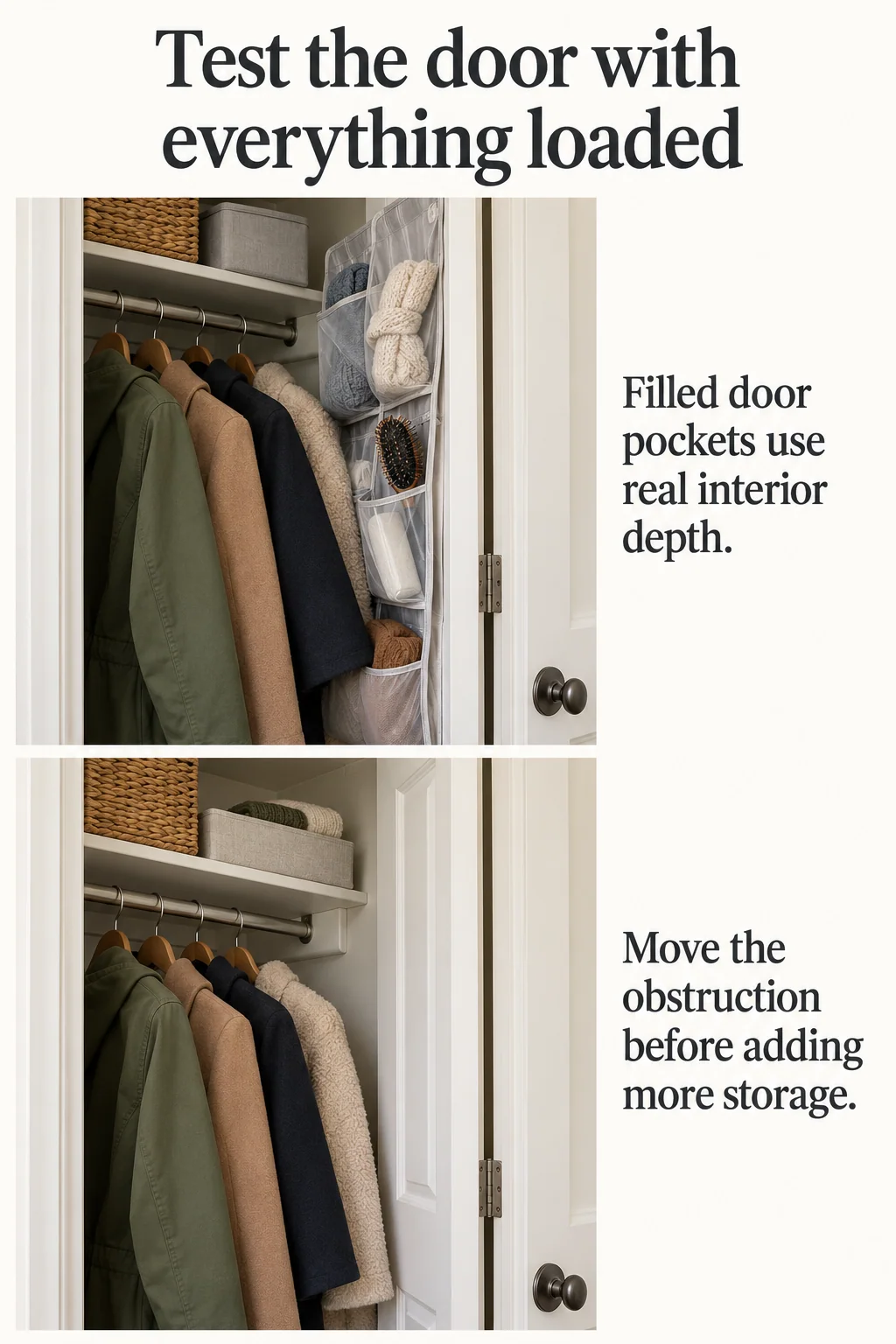
Open and close it slowly with the closet loaded. Watch for coat sleeves caught at the hinge, bag straps across the opening and containers projecting beyond the shelf. A door organizer also occupies interior depth; empty clearance does not prove it will fit once its pockets are filled.
If coats fall off hangers, check whether the hanger supports the garment and whether removing one catches its neighbor. Repeatedly picking coats off the floor is a sign that the rail arrangement needs attention. If gloves go missing, try one accessible return point near the opening rather than several small compartments hidden behind coats.
A useful label describes what belongs there in words the household uses. “Cold-weather accessories” may be clearer than a label for each kind of mitten, especially when several people share the bin. The same principle helps in a linen closet organized by use, although hanging garments need different clearances from folded towels.
Let the first week revise the layout
Keep wet coats and umbrellas out of tightly packed storage until they have dried according to their care instructions. A closet organized perfectly around dry garments can still become unpleasant if damp outerwear is compressed into it. Provide a temporary drying place appropriate to the home rather than leaving water to collect beneath the coats.
For a rented home, begin with movable containers and the existing rail. Check permission and mounting instructions before adding hooks or shelves, and never assume an adhesive hook will support a heavy coat or bag. Match any hardware to the wall and intended load.
After several ordinary departures and returns, notice what lands outside the system. A scarf left on the handle may need a more reachable home; a full bin may contain too much occasional stock. Make that specific adjustment.