Line up the shoes actually worn this week before measuring for a cabinet. Include the pair someone is wearing to work or school: storage can look generously sized at noon and overflow as soon as everyone comes home.
Count a daily rotation, not the whole collection
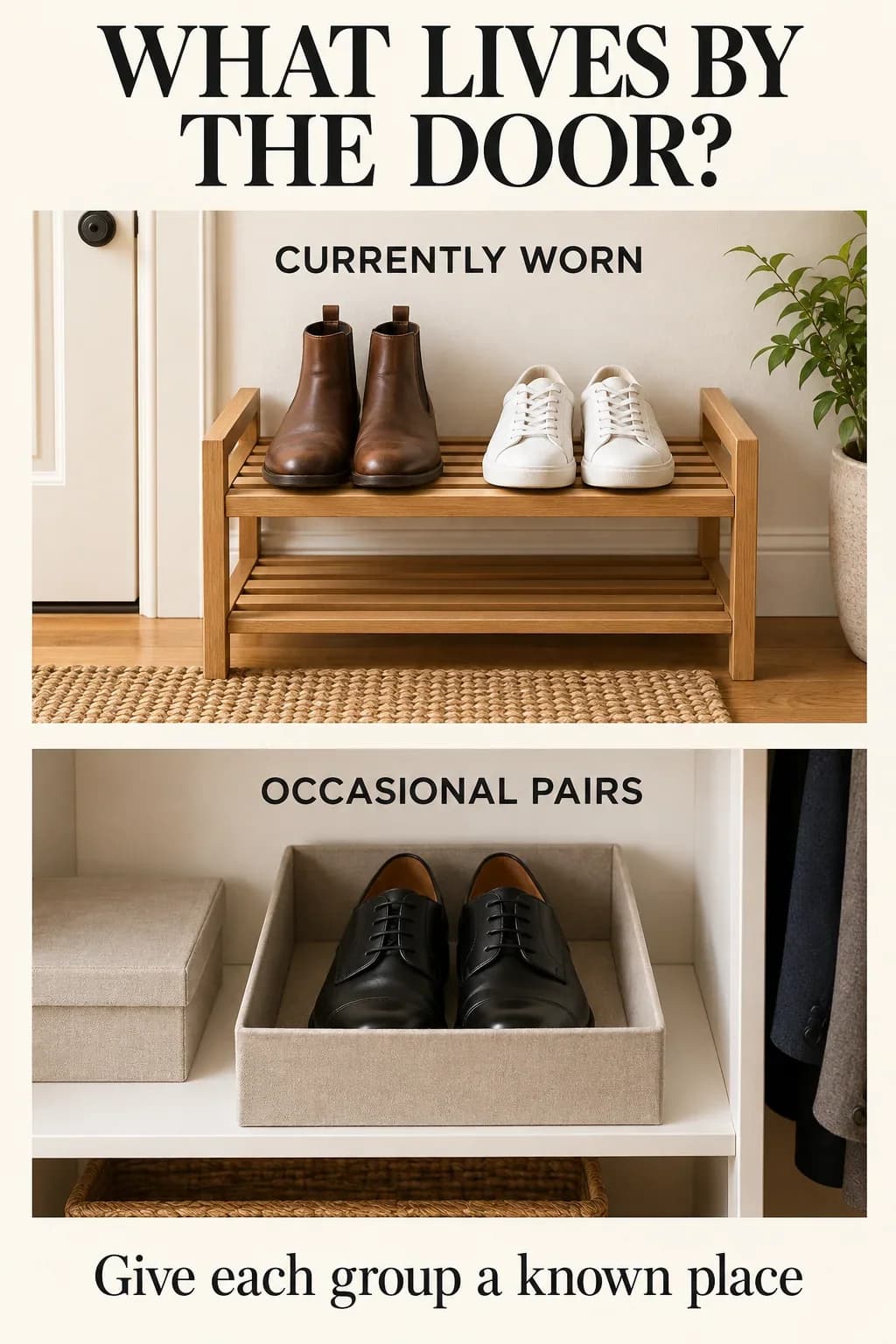
Give each household member a realistic allowance based on what they use. One person may need work shoes and trainers; another may also need boots for a daily dog walk. Occasional dress shoes and out-of-season sandals can live elsewhere, provided that place is known and accessible. Shoes awaiting repair need a separate decision, rather than becoming permanent residents of the bottom shelf.
Write down the total before looking at furniture. Then measure the pairs together as they will sit: heel-to-toe depth, the width of both shoes side by side, and the tallest shaft. A cabinet advertised for eight pairs may have been photographed with smaller shoes than yours. Door hardware, sloping shelves and internal dividers can reduce its usable space further.
A small entryway: four pairs for two adults
Imagine two adults keeping four daily pairs by the door. Their largest pair occupies a rectangle 10 inches wide and 13 inches deep; the tallest shoe is 6 inches high. They find a two-shelf rack with 26 inches of usable width, 14 inches of usable depth and 8 inches of clear height on each shelf. Two pairs take up to 20 inches of width, leaving 6 inches for separation and easier handling. Two shelves accommodate the four-pair rotation without stacking.
Those are illustrative measurements, not standard shoe sizes. The rack's external footprint is 28 by 15 inches, and the available wall recess is 30 by 17 inches. That makes it a candidate, but the household still marks its full footprint on the floor and opens the front door completely. They walk through carrying the usual bag. A rack can fit a recess while its contents project into the route, so they repeat the check with the largest shoes on it.
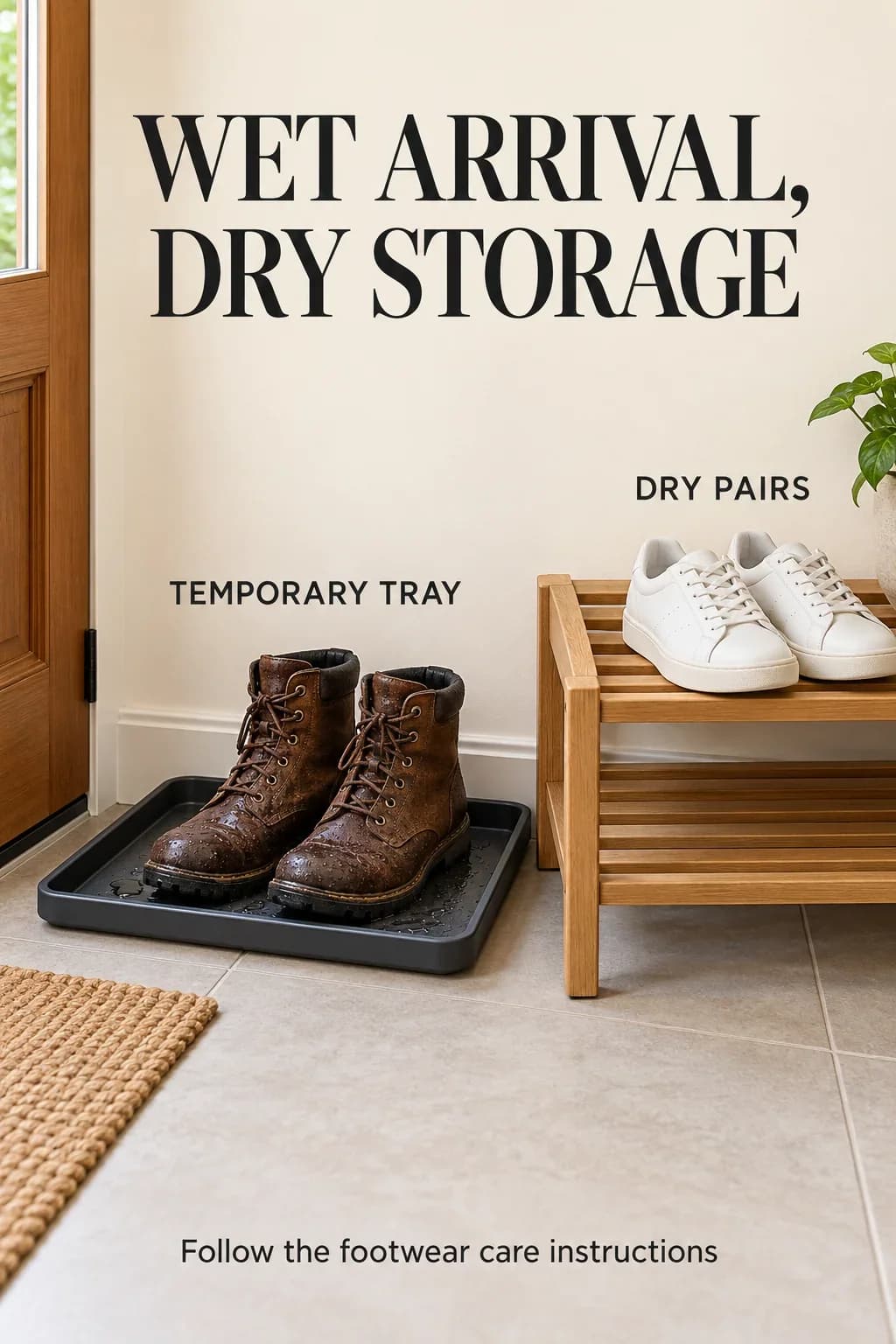
For rainy arrivals, a separate 12-by-16-inch tray fits one of their measured pairs in another recess clear of the doorway. It is a temporary landing place, not a fifth permanent slot. Once the footwear is dry according to its care instructions, it returns to the rack and the tray is cleaned as appropriate. If both people regularly arrive wet together, this one-pair tray is insufficient; they need another suitable landing area or a larger tray that still leaves the route clear.
An open rack wins here because returning a pair takes one action. If the household dislikes visible shoes, a closed cabinet is reasonable only after checking its real inside depth and the space needed to open it. The entryway bench versus console guide helps when seating is part of the same decision. A shoe rack is not a seat unless designed for that use.
A family entryway: six low pairs and two tall pairs
Now consider four people with eight daily pairs: six low shoes and two pairs of tall boots. The widest low pair occupies 10 inches across and needs 13 inches of depth. A rack with two usable shelves measuring 36 inches wide by 14 inches deep holds three pairs on each shelf, using 30 inches of width and leaving handling space. Its exterior is 40 inches wide and 16 inches deep.
The boots are 16 inches tall and, together, occupy 22 by 14 inches on the floor. They go in a separate tray with a usable interior of 24 by 16 inches and an exterior of 26 by 18 inches. The rack and tray require 66 inches side by side; a 70-inch wall bay leaves 4 inches between them. There is no shelf above the boots, and the actual door and walking checks confirm that the tray's greater depth is workable.
This layout keeps tall shafts upright instead of bending them under a low shelf. The tray is the boots' regular position and also receives them damp, where their material and care instructions permit. It cannot simultaneously accommodate every wet trainer. On very wet days, this household uses a second suitable drying area elsewhere; it does not widen the tray into the walking route.
Give each person an identifiable position they can reach and use. A lower shelf may help a child return shoes independently, but any furniture must be installed and anchored according to its manufacturer's instructions. At the weekly reset, swap out an unused pair before adding a new everyday one. When winter adds another daily boot pair, the capacity calculation changes; rearranging the same eight slots does not create a ninth.
The checklist after everyone gets home
- Check the door with every daily pair present and any cabinet doors or lids in normal use.
- Remove one pair without lifting another or pulling a tray across the walking route.
- Check that heels and toes stay within the intended storage footprint.
- Give wet arrivals a suitable temporary place, away from dry stored footwear.
- Return occasional pairs to their separate location during the weekly reset.
Do not shut damp shoes into a crowded cabinet simply to make the entryway look finished. Follow their care instructions, keep the landing surface suitable for the floor beneath, and clean the tray when needed. The entryway rug sizing guide can help coordinate a rug with these separate storage and door footprints.
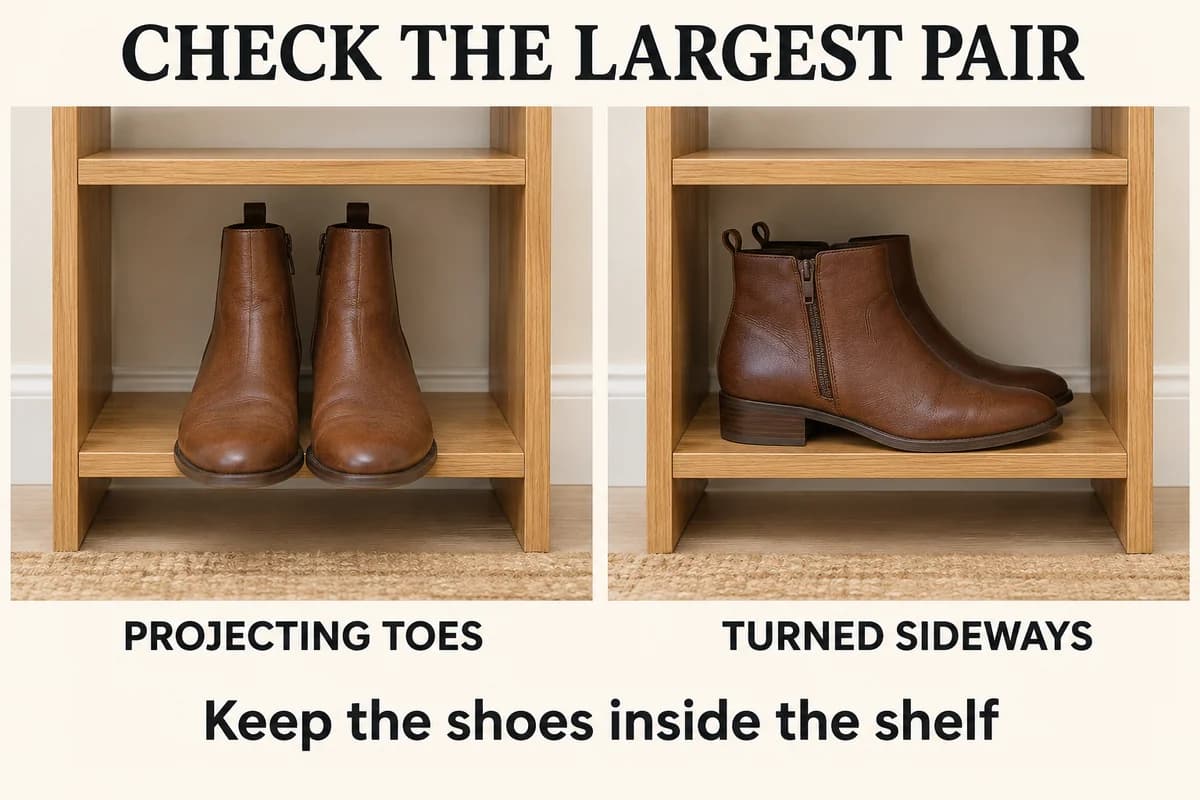
If shoes still gather on the floor, look at the position they were meant to occupy. An empty but awkward slot suggests an access problem; a full slot suggests the rotation has grown. A projecting heel suggests insufficient depth. Fix that specific cause before adding another basket, which may merely give the overflow a new place to accumulate.