A bath mat has to work at the moment you step out, not only when the bathroom is dry and photographed. Start with that landing area. Then consider the door, the floor beneath the mat and where the textile will dry between uses.
This guide concerns mats used outside the bath or shower. Products intended for use inside a tub or shower have a different job and their own installation and care instructions.
Locate the wet step before choosing the rectangle
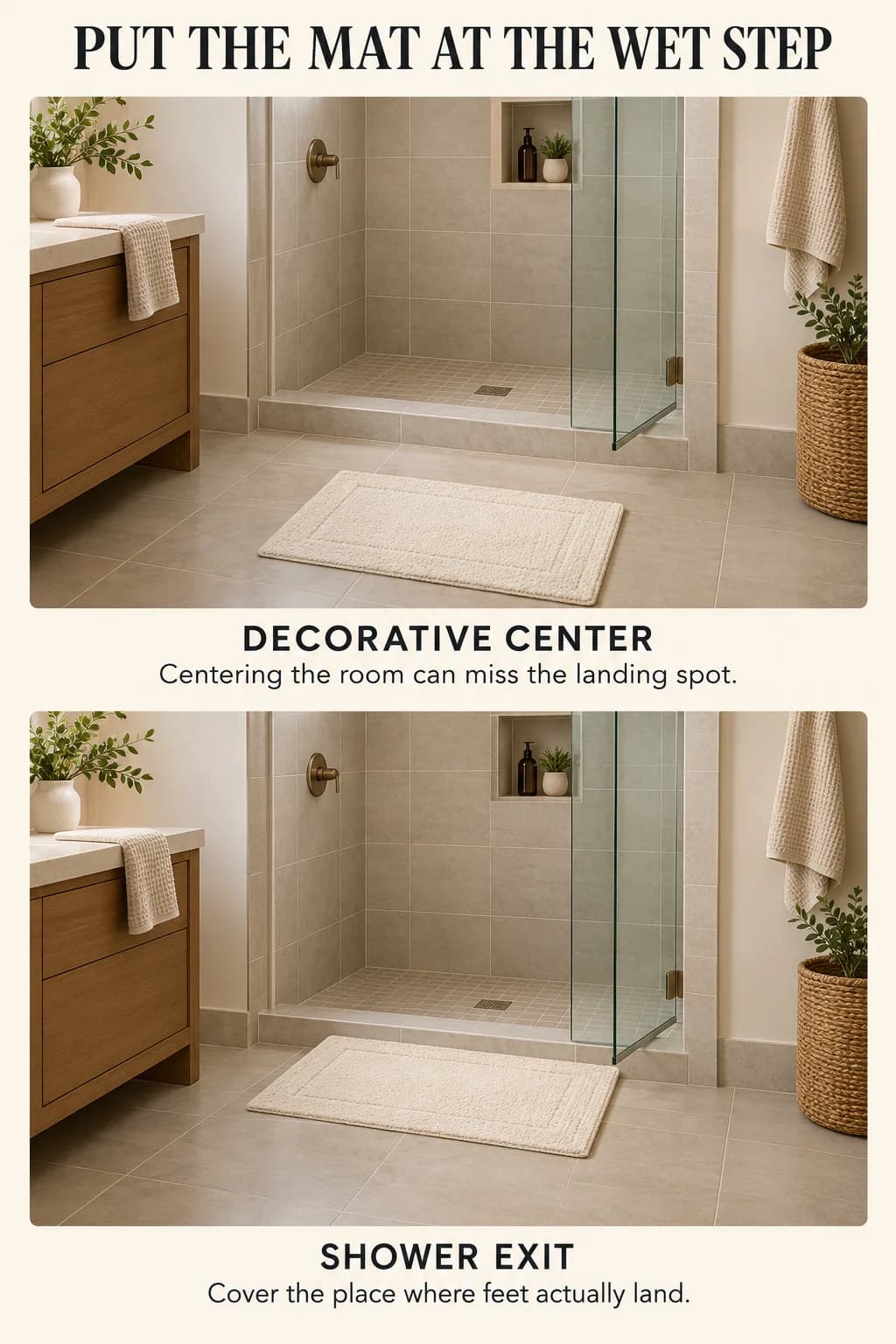
Stand beside the bath or shower and consider where you normally place your feet as you exit. The mat needs to cover that useful area without forcing an awkward step sideways. A decorative runner centered on the room may leave the actual landing spot uncovered.
Measure the available area with doors open and closed. Include the bathroom door, shower door and any nearby cabinet. A thick mat may fit on the floor but obstruct a low door; a wide one may extend into the swing of a shower enclosure. Use a thin temporary outline to assess the footprint, then check the thickness of the actual mat separately.
Do not choose the largest size merely because it looks generous. It also has to fit the laundry equipment and have somewhere to dry. In a tight room, a smaller mat placed accurately can be more practical than a runner that stays wedged between the bath and vanity.
Choose the drying routine with the material
Cotton bath textiles can be absorbent and pleasant underfoot, but thickness, construction and care requirements vary. A dense, plush mat may feel appealing while taking more effort to dry than a lighter one in your particular bathroom. Backed and unbacked products also behave differently. Read the specific product information rather than deciding from the fiber name alone.
The Home Depot bath-mat guide surveys materials and uses. Those categories are a starting point, not a guarantee that any backing is suitable for your floor or that a mat will prevent every slip. Check the flooring maker's instructions alongside the mat's guidance, especially with sensitive finishes.
Read the washing and drying label before purchase. For example, Parachute's bath-rug details specify care for that particular cotton product. Its directions should not become a universal routine for every mat with a similar appearance. If the backing requires air drying and you have nowhere to spread it, that inconvenience belongs in the buying decision.
A narrow bathroom used by two people
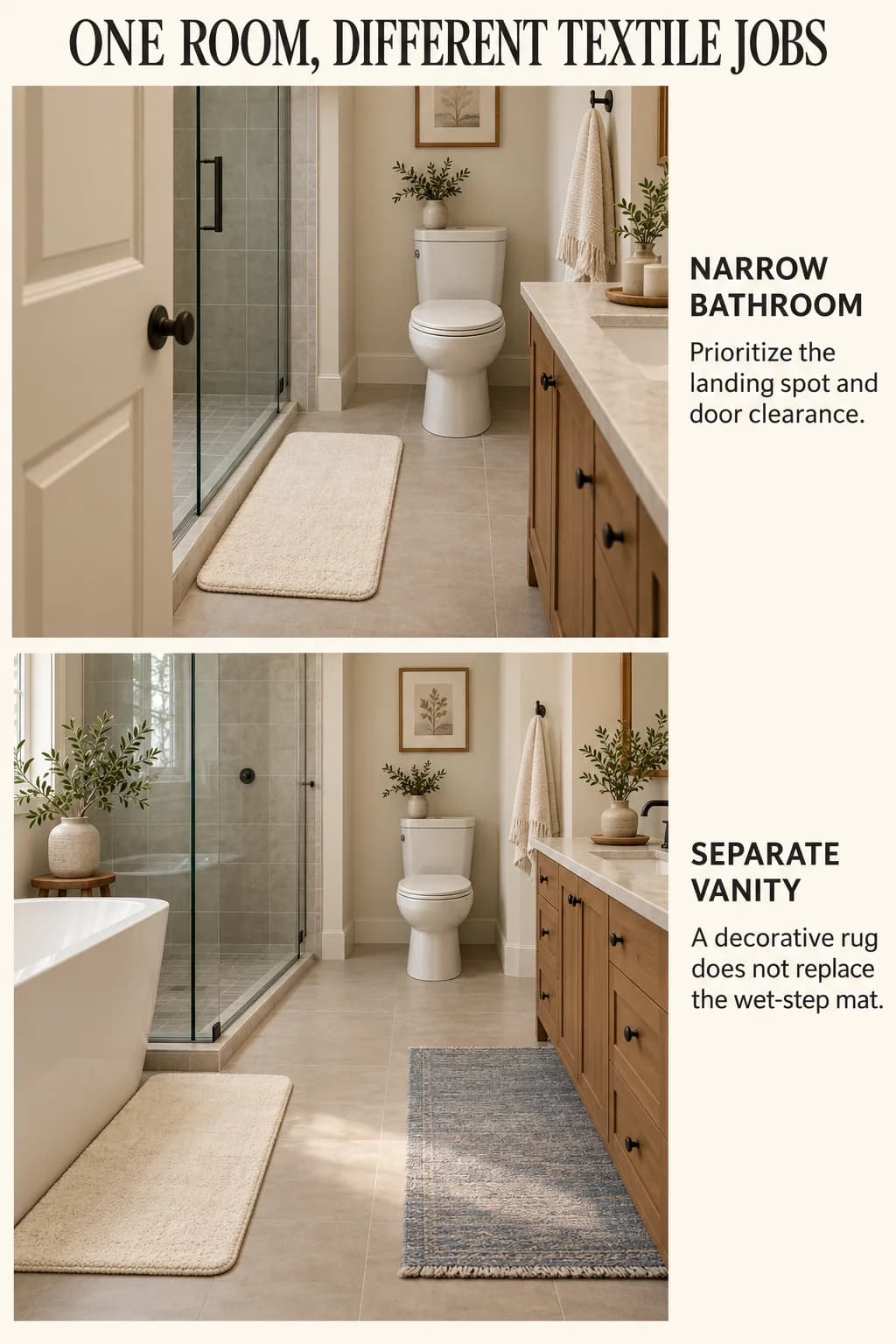
Imagine a shower beside a vanity, with the bathroom door swinging across the open floor. Choose a mat that covers the step-out spot while remaining outside the door's movement. A low-profile, washable textile may be easier here than a thick runner, provided its backing or required support is compatible with the floor and the product stays stable in use.
After bathing, move it to the drying location recommended by its maker, leaving the floor able to dry too. If both people shower close together and the mat becomes saturated, a second dry mat in rotation may be useful. First check where the used one will go; owning two does not help if both end up damp on the floor.
Keep towels and daily toiletries out of the landing area. An organized bathroom counter can reduce the overflow of baskets and bottles that otherwise migrate beside the shower. This arrangement favors a clear wet step over a larger decorative rug.
For a room with no suitable drying space, look for a product whose care routine you can actually manage, or reconsider how the bathroom is used between showers. Do not assume that a heavy mat will dry quickly simply because the packaging calls it absorbent.
A larger room with a separate vanity zone
A spacious bathroom may benefit from two distinct decisions: an absorbent mat by the bath and an optional decorative textile at the vanity. They do not have to be identical sizes. The bath mat serves wet feet; the vanity piece may primarily provide a softer standing area and visual connection to the room.
Choose a shared color family, such as an ivory bath mat and a muted blue vanity rug, rather than buying a matching set whose shapes do not fit either location. Keep both clear of openings and check each product's suitability for its position. A decorative rug that cannot handle the likely moisture should not become the shower landing mat.
If the vanity textile needs a separate pad, consult both manufacturers and the flooring guidance. Our rug-pad guide explains the general compatibility and clearance questions, but an ordinary indoor rug-and-pad combination is not automatically appropriate beside a wet shower. If suitable support cannot be established, choose a different product rather than improvising layers.
Read the underside as well as the surface
A mat that feels dry on top may still hold moisture underneath. Lift it as part of its care routine, inspect the floor and let both surfaces dry as directed before replacing it. If the backing deteriorates, curls or leaves residue, stop using that combination and follow the floor and mat makers' advice.
If the mat shifts, check that the floor is clean and dry as required and that the product is intended for that surface. Do not treat a “non-slip” label as permission to ignore movement you can actually see. If the door catches, reducing the footprint may help only when the catch occurs at the edge; excessive thickness beneath the whole swing requires a lower-profile choice or another placement.
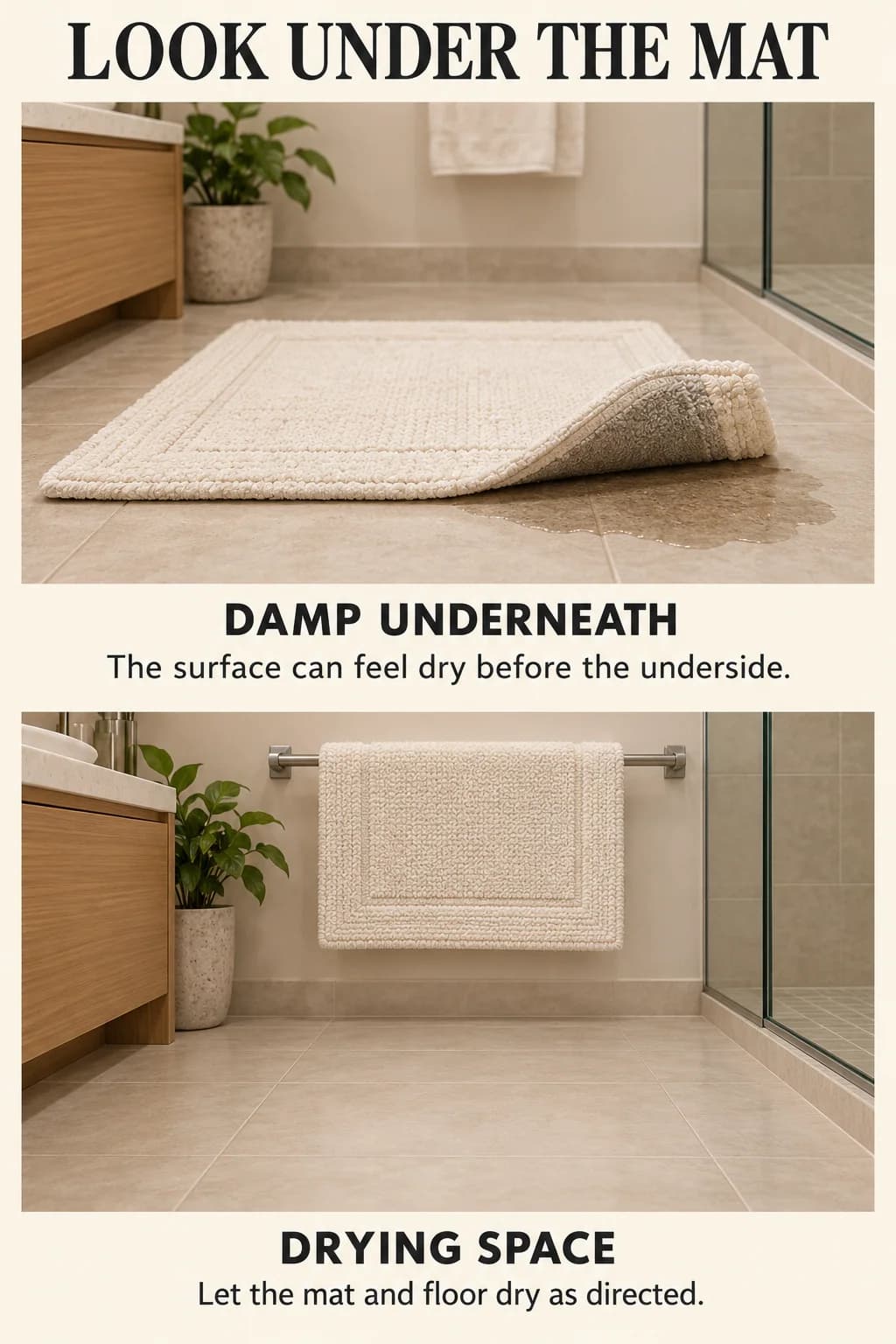
A curled edge, a saturated textile and an obstructed door are different problems. Solve the one present in your room instead of choosing another mat solely by color. Once the practical fit is right, texture and color can finish the bathroom without being asked to do the work of drying or stability.