A polo can look crisp with trousers and oddly bulky with a skirt, even when both bottoms fit. The difference is often a few inches of hem or the thickness of the fabric sitting inside the waistband. Start there. The collar is already doing some of the dressing up.
Match the hem to the polo you actually have
Lay the shirt flat and look at its lower edge. A straight, thin hem gives you different options from a deep ribbed band that grips the hips. Then put it on with the intended bottom: a fabric name alone cannot tell you whether the tuck will work.
A textured piqué polo often holds a fairly distinct outline; a fine sweater-knit version may fall more softly. The familiar piqué used for polo shirts is knitted, although piqué can also describe a woven fabric. “Knit versus cotton” is not a useful distinction: one describes construction, the other a fiber. Instead, feel the thickness and watch what happens when you gather the lower edge. If a handful of fabric creates a ridge, that ridge will probably remain inside a close-fitting waistband.
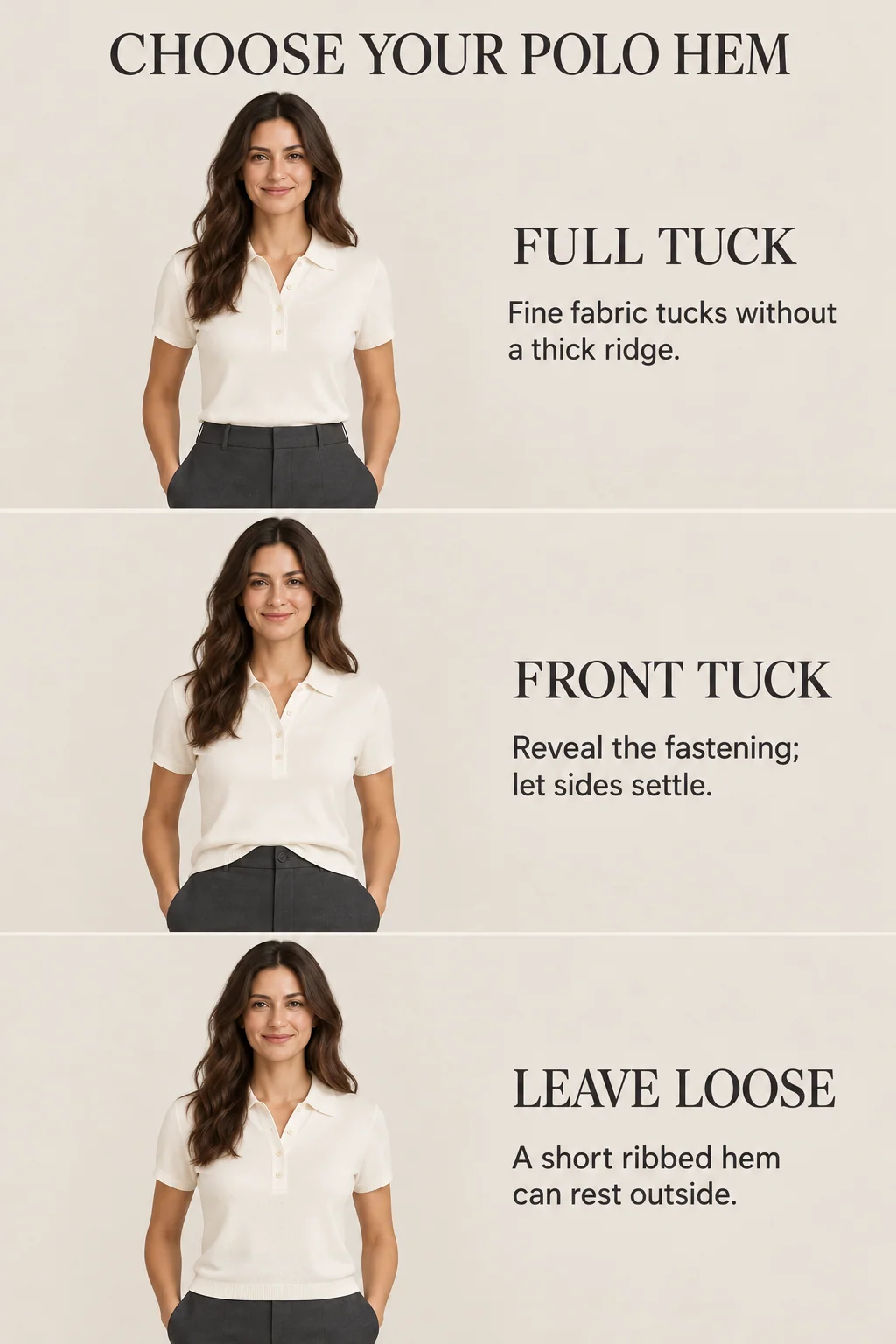
Full tuck: Try it with a fine, straight-hemmed polo and trousers that have room at the waist. Smooth the shirt downward, then release enough fabric to sit and reach comfortably. A tight waistband cannot hide a thick tuck; it simply displays it. If the placket pulls open, change the fit rather than repeatedly tugging the hem down.
Small front tuck: Use this when you want to reveal the fastening of jeans without gathering the whole shirt. Tuck a narrow section at the center, let the sides fall and inspect the profile. Keep it only if the back settles naturally. A long polo with a substantial back tail may form a shelf above the seat; that is a reason to wear it loose or choose another shirt.
Untucked: A short polo whose hem meets or slightly overlaps the waistband can finish a wide trouser or flowing skirt neatly. A ribbed band can sit on the waistband without being pushed inside it. For more coverage, choose a longer straight hem and let it skim the bottom; exposing the waist is an option, not the admission price for a good outfit.
Three ways to build around that choice
Navy polo, straight jeans and brown loafers
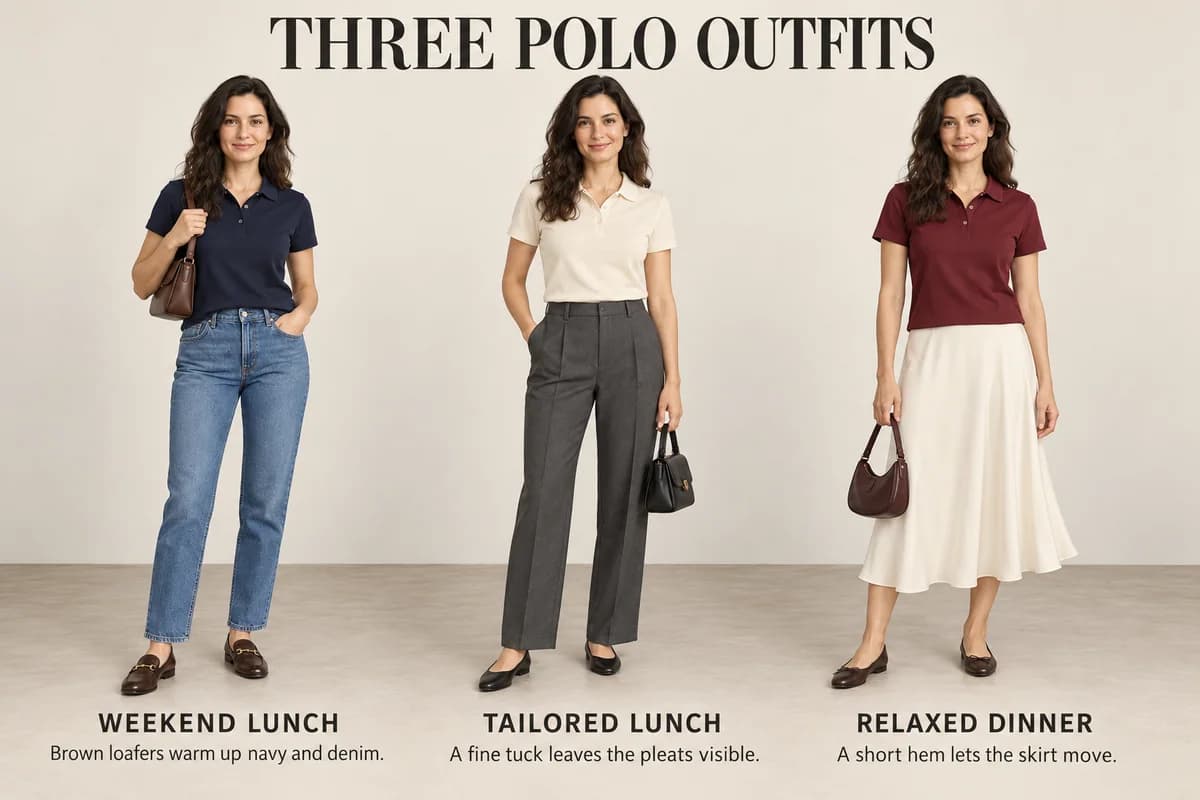
For a weekend lunch, wear a navy piqué polo with medium-blue straight jeans and chocolate loafers. A small front tuck reveals the jeans fastening while leaving the shirt relaxed. The close navy-and-blue pairing makes the texture of the polo noticeable; the brown shoes add warmth without another bright accent. A brown shoulder bag repeats that small amount of contrast.
If you prefer an untucked shirt, use a straight hem ending around the upper hip and leave the jeans leg visible beneath it. For a longer walking day, swap the loafers for cream sneakers you already find comfortable. The lighter footwear makes the outfit more casual; you do not need a belt, necklace and scarf to compensate. With a striped polo, pick one stripe color for the shoes or bag and leave the other accessories quiet.
Cream fine-knit polo, charcoal trousers and black flats
Choose a cream fine-knit polo with charcoal pleated trousers and black almond-toe flats for a lunch reservation or an informal meeting. A full tuck makes the pleats visible and distinguishes the smooth upper body from the fuller leg. Let the waistband sit comfortably instead of pulling the shirt taut across the chest. A compact black bag ties the shoes back into the outfit.
If your polo has a thick ribbed band, wear it just over the waistband instead of forcing it underneath. The result is softer but still considered. Add an open charcoal blazer when you need another layer, with its lapels sitting outside the polo collar. If you want a sharper, more shirt-like alternative, our white button-down guide explains how a different front fastening changes the outfit.
Burgundy polo, a fluid cream midi skirt and dark flats
A burgundy polo with a fluid cream midi skirt and dark-brown flats works for dinner when you want movement without a very dressy top. Here the polo's collar provides definition above a skirt that moves. Choose a short, softly fitted polo that stops near the skirt waistband, or tuck a thin straight hem if it does not show through the skirt. A small burgundy bag can repeat the top color without introducing more hardware.
With a clingy skirt, examine the side view: a visible ring of tucked fabric defeats the clean fall you chose it for. Leave a short polo loose or switch to a more substantial skirt fabric. In cooler weather, add close-fitting dark boots beneath the midi hem and an open coat. If you like this balance of a buttoned knit and skirt but want a softer neckline, compare wearing a cardigan as a top.
Give the collar a place to sit
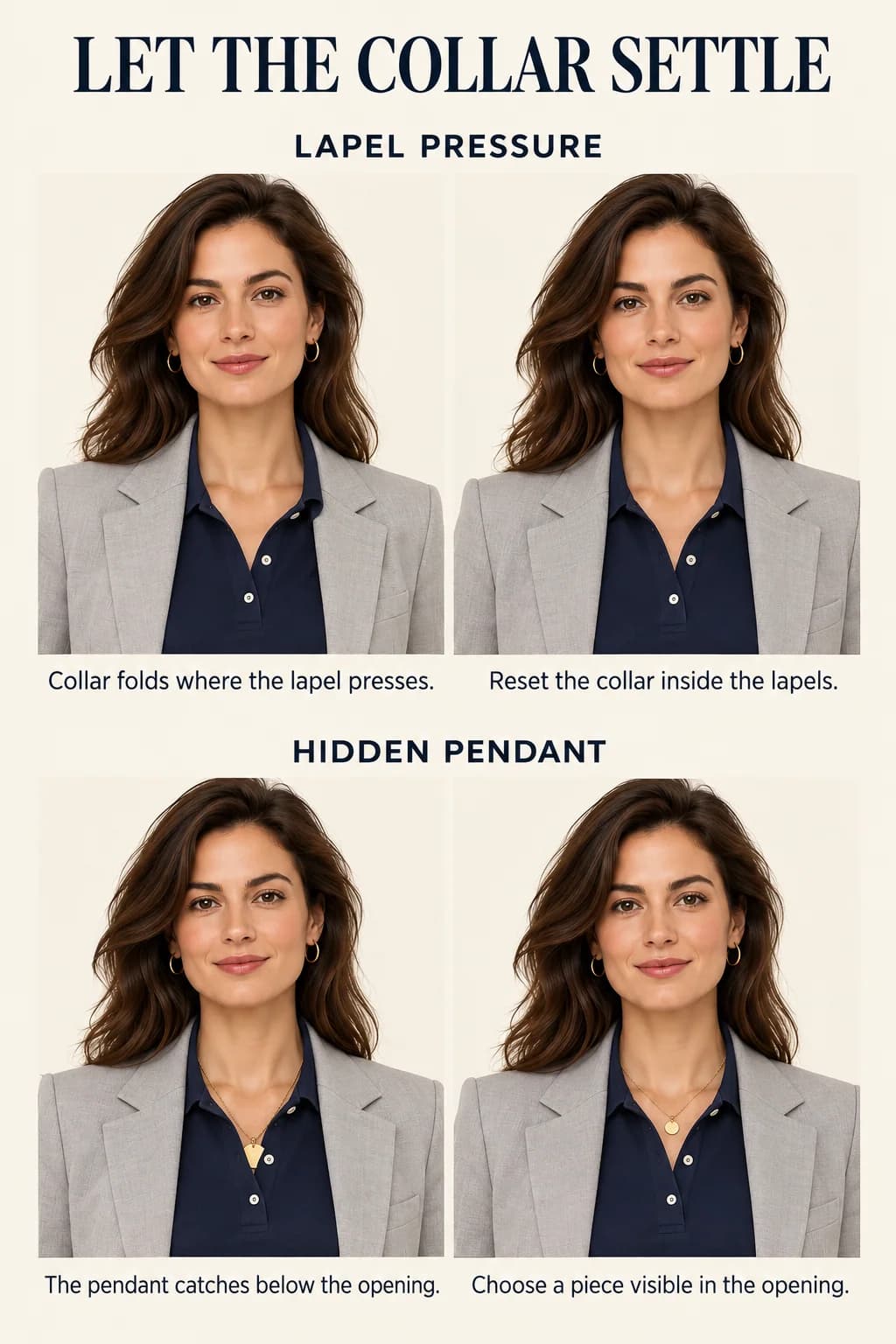
Open or close the placket until its edges rest comfortably. An open button can create useful space for a short pendant; it cannot fix a shirt pulling across the bust. If the collar tips flip because a jacket presses against them, lift the collar out, settle the shirt shoulders and replace the jacket. Persistent buckling usually means those two necklines need more room.
A scarf and a polo can coexist. Keep a light scarf loosely below the collar, or wear the scarf for outdoor warmth and remove it indoors. For jewelry, choose one piece whose outline remains visible in the space available. Large earrings may be simpler than a necklace that repeatedly falls beneath the placket, but there is no obligation to leave the neck bare.
When the outfit shifts as soon as you move
Sleeves bunching beneath a blazer suggest insufficient room through the jacket sleeve or a polo sleeve that is too thick for it. Test a finer shirt before sizing up the entire jacket. A short sleeve caught at the armhole needs to be smoothed down first; extra size will not fix trapped fabric.
If a fuller bust makes the placket gape while the shoulders fit, look for more room through the front or a different cut, rather than closing every button and hoping. A simple camisole can provide coverage when you intentionally wear the placket open, but it does not release tension in the shirt itself.
Finally, check the hem after sitting. If the tuck needs rebuilding every time, use an untucked version for that day. The useful polo outfit is the one that retains its shape while you wear it, whether its waist is defined or loose.