A long vest can look easy on a hanger and become awkward the moment a shirt sleeve bunches inside its armhole. Before deciding whether it needs skinny trousers, a belt or higher shoes, give the layers enough room to move.
This guide is about a tailored sleeveless vest that reaches below the hip, sometimes toward the knee. A padded outdoor gilet or a knitted pullover has a different job. For the latter, use the sweater-vest guide.
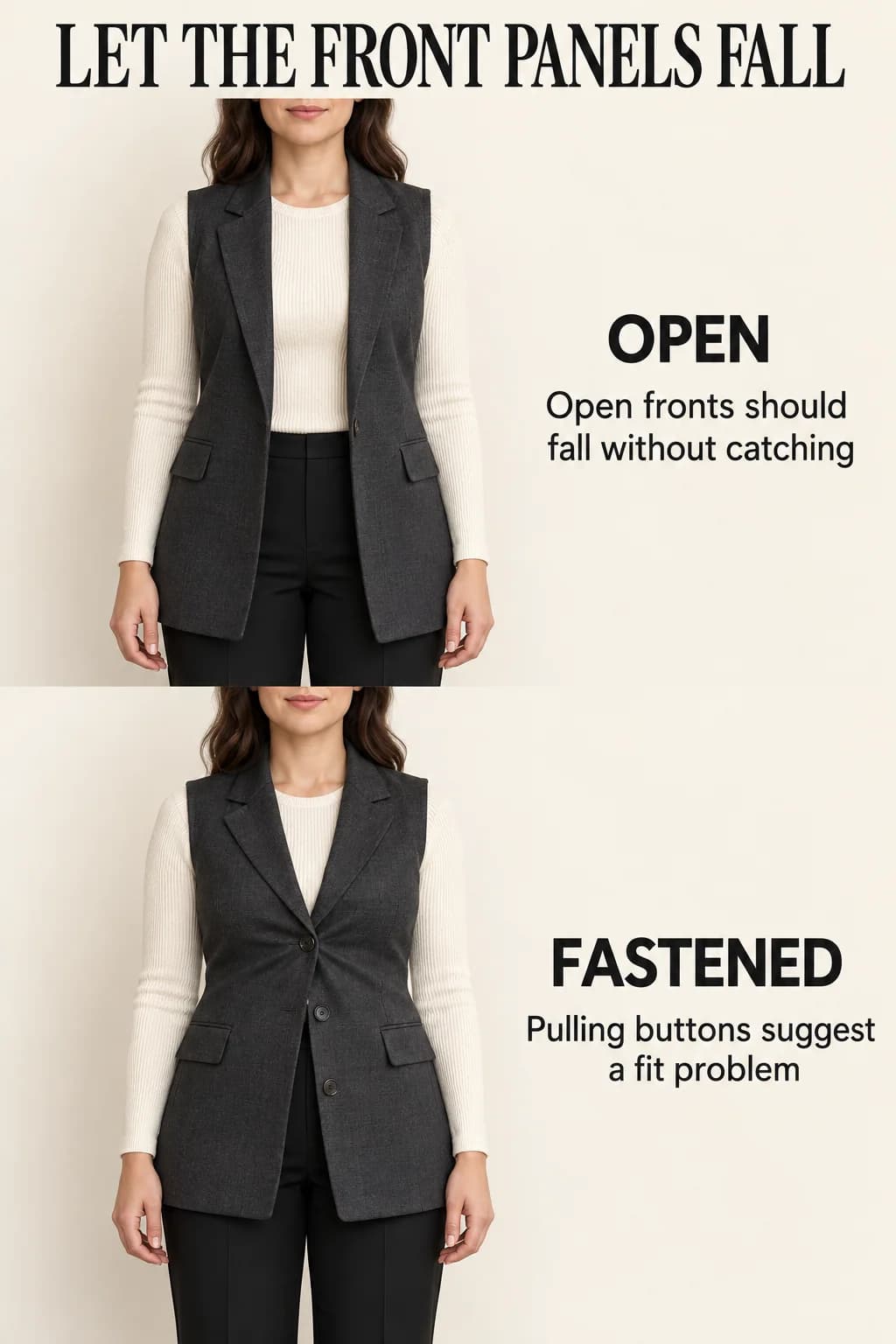
Let the front panels fall
Try the vest open over a light top. Its front edges should fall without constantly catching on a waistband, a large belt buckle or bulky pockets. A slightly uneven fold as you move is normal; panels that remain hitched up suggest something underneath is in the way. Remove that obstruction before trying to press the vest into a different shape with a belt.
If you want to fasten it, check the buttons while standing and sitting. Diagonal pulling around a button is a reason to reconsider the fit or wear it open, not a styling feature you need to disguise. An open vest does not have to meet at the center to look intentional, but it still needs enough room across the back and armholes for ordinary movement.
Start with a quiet straight-trouser outfit
Wear a charcoal tailored vest over a fine ivory crewneck, with black straight trousers and black slim-soled loafers. This is an easy direction for a casual office: the pale knit separates the vest from the trousers, while the two dark outer areas keep the outfit restrained. The loafers echo the tailoring without adding the weight of a thick lug sole.
Let the vest hang open and the knit end smoothly at or just below the waistband. There is no need to reveal the waist if the front panels already fall cleanly. Check that the trouser hem clears the shoe and ground when you walk; a long vest plus a dragging trouser hem can feel cumbersome for practical reasons, regardless of proportions.
For a warmer day, replace the knit with an ivory short-sleeved tee of similar weight. The charcoal-and-ivory relationship stays intact, but there is less fabric under the armhole. For a less formal setting, white leather sneakers can take the loafers' place. Recheck the trouser length because a change in sole height can alter clearance.
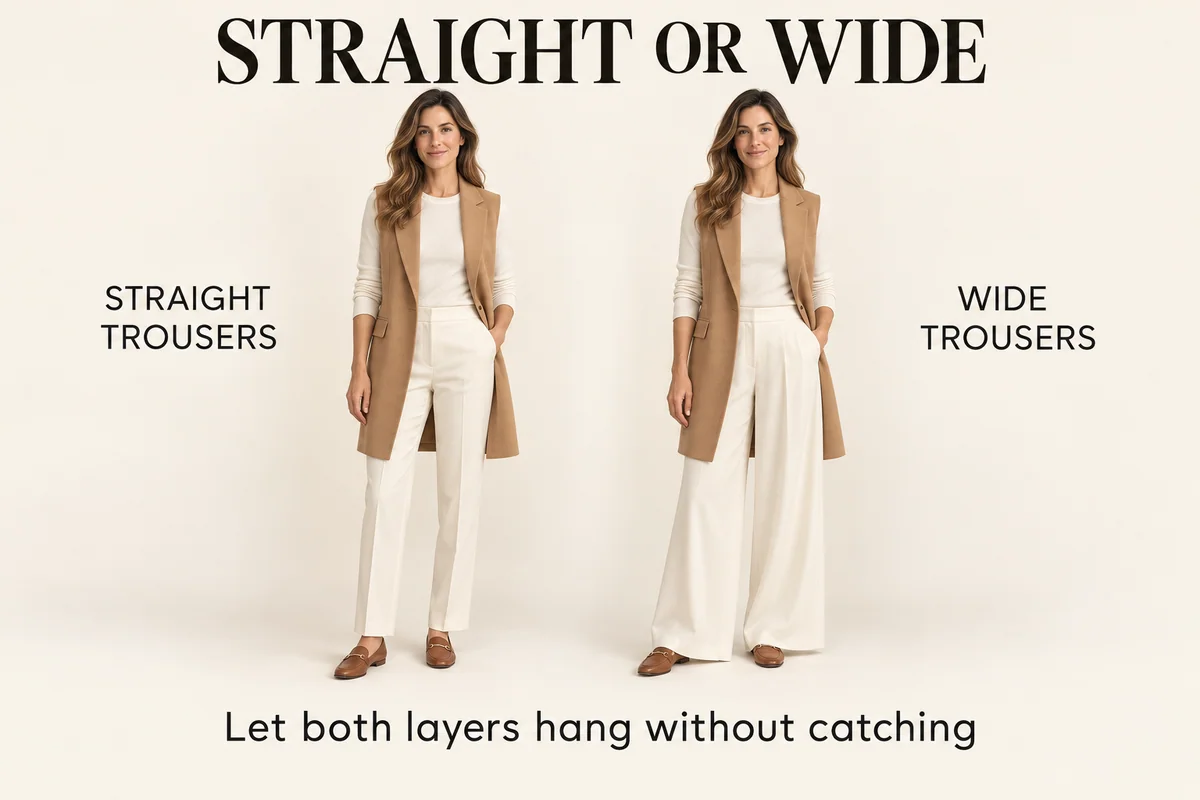
Wide trousers need room to move, too
A camel long vest, an ivory poplin shirt and cream wide-leg trousers make a fuller outfit for lunch or a creative workplace. Choose trousers that fall rather than jutting stiffly sideways. Finish with cognac loafers whose toes remain visible beneath the hem. Camel and cognac provide two warm notes around the lighter shirt and trousers, so the outfit has definition without a dark dividing line at the waist.
Keep the vest open. Its straight front edges sit over the softer trouser folds, making the different shapes visible. Wide trousers are not automatically too much volume for a long vest; the question is whether each layer can hang without snagging. If the shirt billows beneath the armholes, use a narrower sleeve or a softer cotton shirt before abandoning the trouser shape.
A small front tuck can contain the shirt at the waist, but only if the vest panels still slide past it. If the tuck creates a ledge, leave the shirt out or try a shorter shirt. The white button-down guide offers useful sleeve and hem adjustments. In cooler weather, exchange the poplin for a thin ivory knit and add cream socks with the loafers. This keeps the color grouping while reducing exposed skin.
Why a belt is optional
A soft vest may gather neatly under a belt; firm tailoring may buckle into stiff folds. Try the belt loosely and sit down. If the lower panels flare because the belt is forcing fabric into them, remove it. You can still wear a belt through the trousers' loops underneath, provided its buckle does not catch the vest. There is no requirement to turn every long layer into a waist-defining one.
Build the cold-weather outfit from the outside in
For a winter commute followed by time indoors, pair a navy long vest with a fine gray merino crewneck, dark straight jeans and chocolate-brown ankle boots. Add a roomy chocolate wool coat that extends below the vest. The navy and denim sit close in color, the gray lightens the center, and the brown boots connect with the outer coat. A small heel is optional; use a boot you can walk in comfortably.
The coat is the deciding piece. Put it over the full outfit and reach forward as if holding a steering wheel or carrying a bag. Then sit. If the vest pulls across the back or its fronts fold inside the closed coat, the outer layer needs more room. A generous coat may work with this outfit even if a close-fitting jacket does not.
If your only warm coat is too narrow for the vest, wear the gray knit and jeans outdoors and carry the vest to put on indoors, or leave the vest out that day. Do not replace the thin knit with a chunky sweater and expect the same coat to accommodate it. For a milder day, omit the coat and add a scarf, keeping the scarf ends away from the vest fastening.
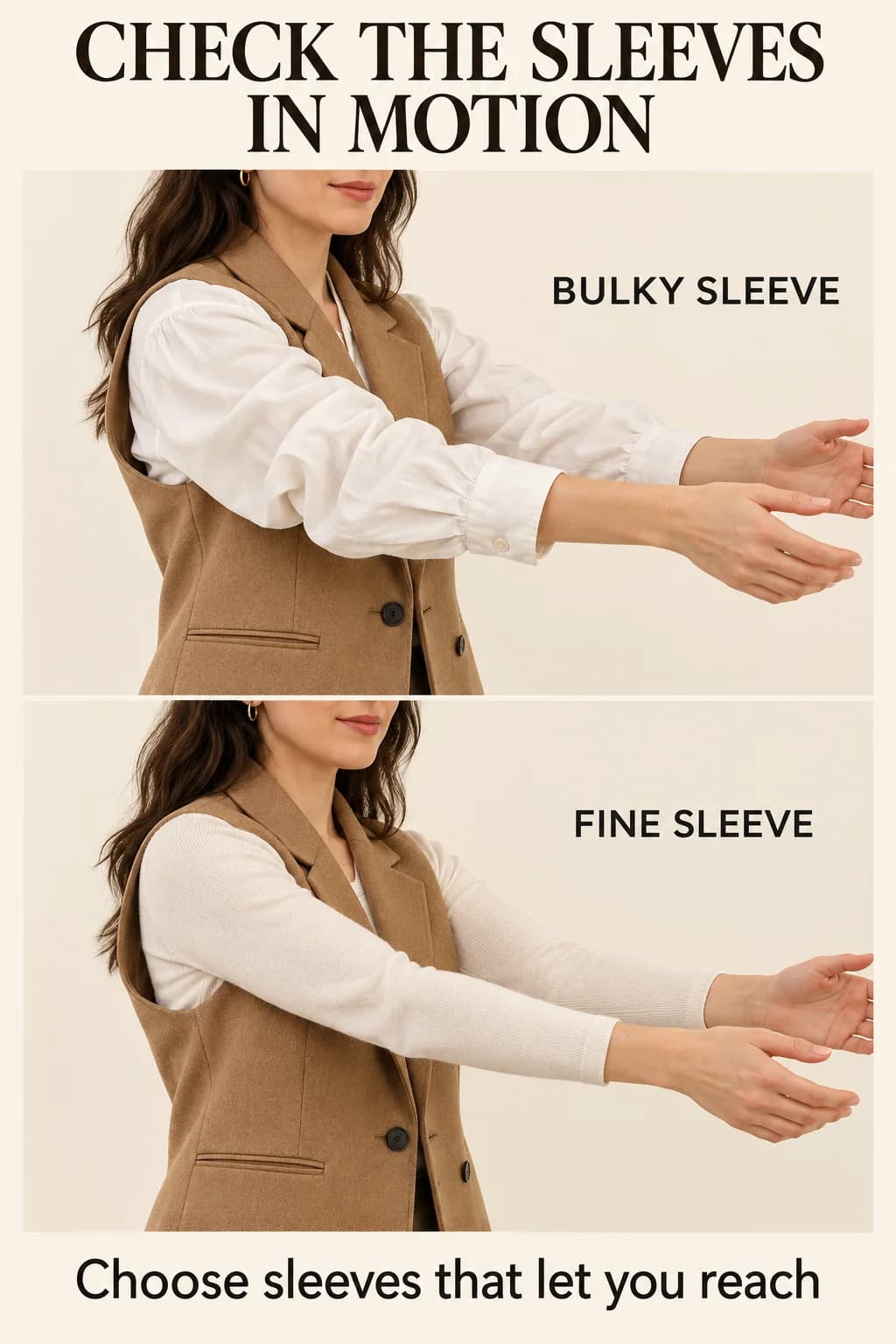
Check the sleeves before changing the whole outfit
Reach forward, raise your arms enough to put on a bag, and bend your elbows. Fabric gathered tightly at the vest's armhole can restrict movement even when everything looks smooth with your arms down. A thinner sleeve, a less dropped shoulder or a vest with more armhole room may solve it. Pulling the shirt sleeve down once will not fix a combination that bunches again whenever you move.
The useful long vest is the one you can forget about while wearing it. Keep the outfit if the fronts fall freely, the sleeves move and the shoes suit the day, whether the trousers underneath are narrow or wide.