A towel bar's height has two jobs: keep the towel clear and put it within comfortable reach. The first depends on the towel you actually hang. The second depends on who uses the bathroom. A nominal installation height cannot resolve either on its own.
Measure the towel in its everyday fold
Fold the towel exactly as it will sit on the bar, drape it over a temporary rail and measure from the top of the rail to the lowest hanging edge. Call that the drop. Do not assume it is half the package length: a loose fold, decorative border or uneven ends can change what hangs below the bar.
Then measure the height of anything under it. On an empty wall that is the finished floor. Beside a vanity, it might be the counter, a radiator or the rim of a bin. The working calculation is bar height minus towel drop equals hem height. Compare that hem with the obstruction, then test the reach. If clearance demands a bar nobody can comfortably use, change the towel or the location.
Home Depot's installation guide uses approximately 48 inches as a common starting height and recommends adjusting for the users. It is useful as a first piece of tape on the wall, not a result to copy. Hold the actual towel at that line before making holes.
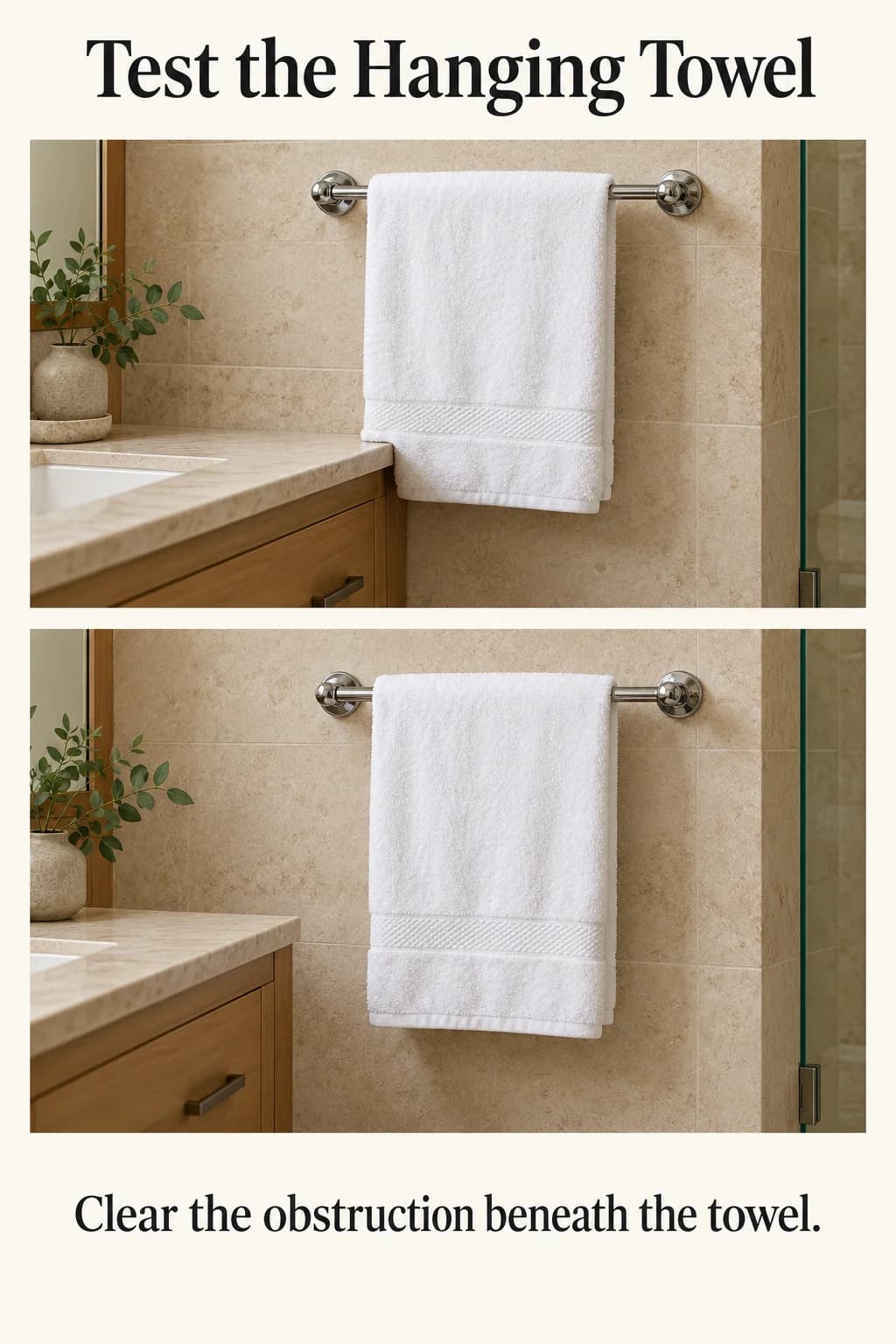
One bath towel on an open wall
Suppose the folded bath towel has a measured 28-inch drop. At a bar height of 46 inches, its hem finishes 18 inches above the floor: 46 minus 28 equals 18. The intended adult can lift the towel off without raising their shoulder awkwardly, and the towel hangs on a clear wall beside the shower. That is a workable trial for this household, subject to the mounting instructions and door test.
Put the same arrangement over a 34-inch counter and the towel would overlap the counter's height by 16 inches. Raising the bar to 64 inches would leave its hem at 36 inches, just 2 inches above the counter, but could make it inconvenient to reach. In this example, move the bar to the open wall rather than turning a comfortable rail into overhead storage.
Check the towel's width as well. A bar described as 24 inches may use that measurement for mounting centers or a nominal rail dimension. Compare the manufacturer's usable span with the folded towel, leaving it free instead of packed between posts. Two thick towels squeezed onto a short bar can overlap even when the floor clearance is generous.
A nearby clear landing spot helps: the bathroom counter organization guide keeps bottles and appliances out of the hand's route between basin and towel. Do not position the bar so a dripping hand must cross an electrical appliance to reach it.
Why the stacked arrangement fails this family
A second household wants two bath towels on one short wall. Their lower bar is reachable at 40 inches and the towel drop is 26 inches, leaving a hem 14 inches above the floor. To put the upper towel's hem 4 inches above that lower bar, its rail must be at 70 inches: 40 plus 4 plus 26. The separation looks tidy, but one intended user cannot reach the upper rail comfortably.
The 4-inch gap is this example's visual separation, not a drying standard. Raising both rails would not solve reach. Lowering the top rail would make its towel overlap the bottom one. The sensible response is a different arrangement: an adult bath-towel bar on another wall and a lower hand-towel bar near the basin.
For the child in this example, a comfortable trial bar height is 32 inches. A small hand towel with a measured 14-inch drop ends 18 inches above the floor. The child can replace it without stretching, and it clears the cabinet door when open. Another child may need a different height, so test with the intended user rather than treating 32 inches as an age-based rule. A reachable hook is another option, but measure the towel hanging from that hook because its drop changes.
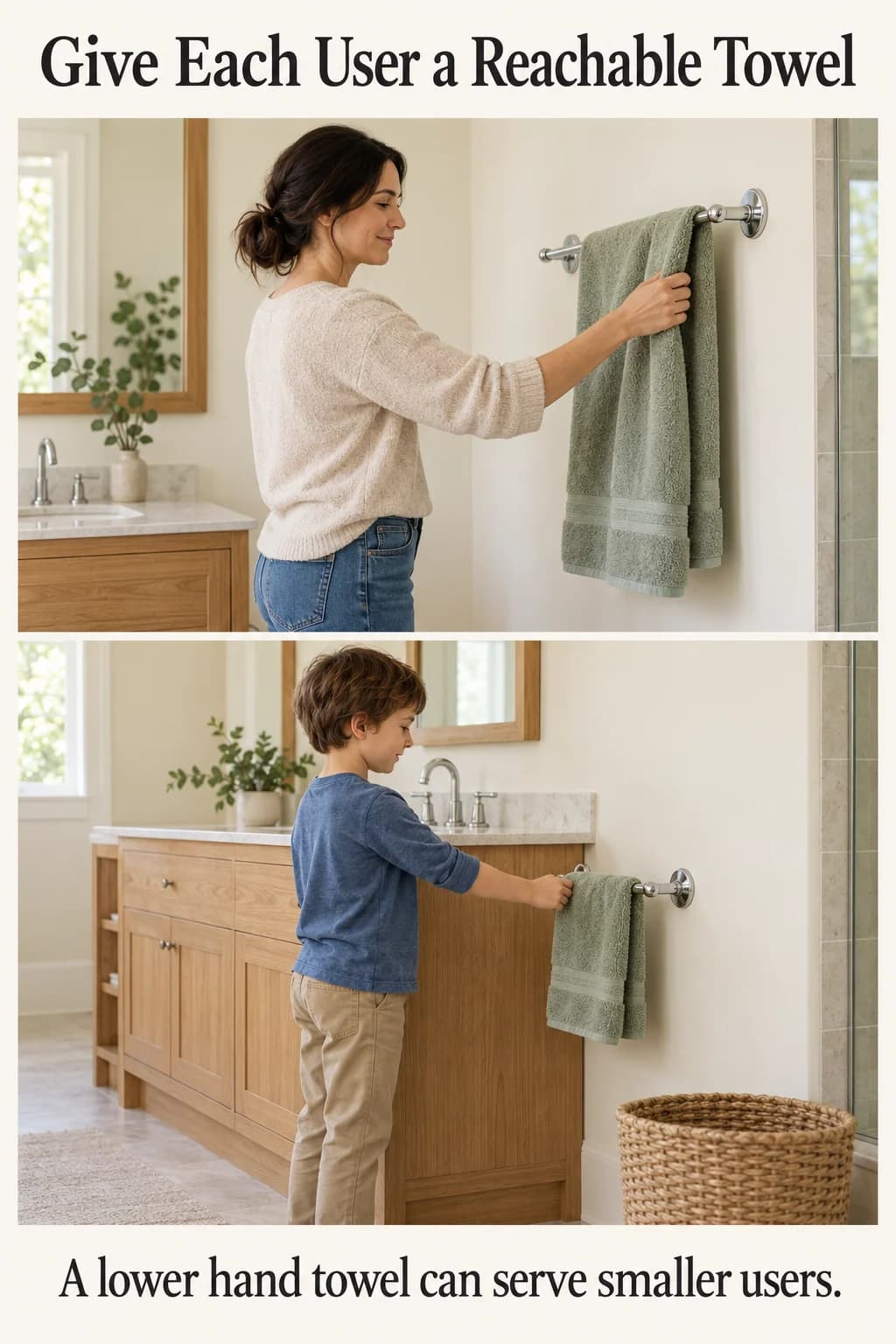
Before either bracket is fixed
Use the supplied mounting template and a level after the location has passed the towel test. Moen's Method specification sheet, for example, distinguishes 18-inch and 24-inch post-center spacings. Those marks are for the chosen hardware; the visible length of a different brand's bar is not a substitute template.
Confirm suitable support for the wall and follow the manufacturer's fastener instructions. Tile, hollow wall and a stud-backed location need different installation decisions. If the desired marks miss suitable support, resolve the support or relocate before drilling. A towel rail is not a grab bar and should not be treated as one.
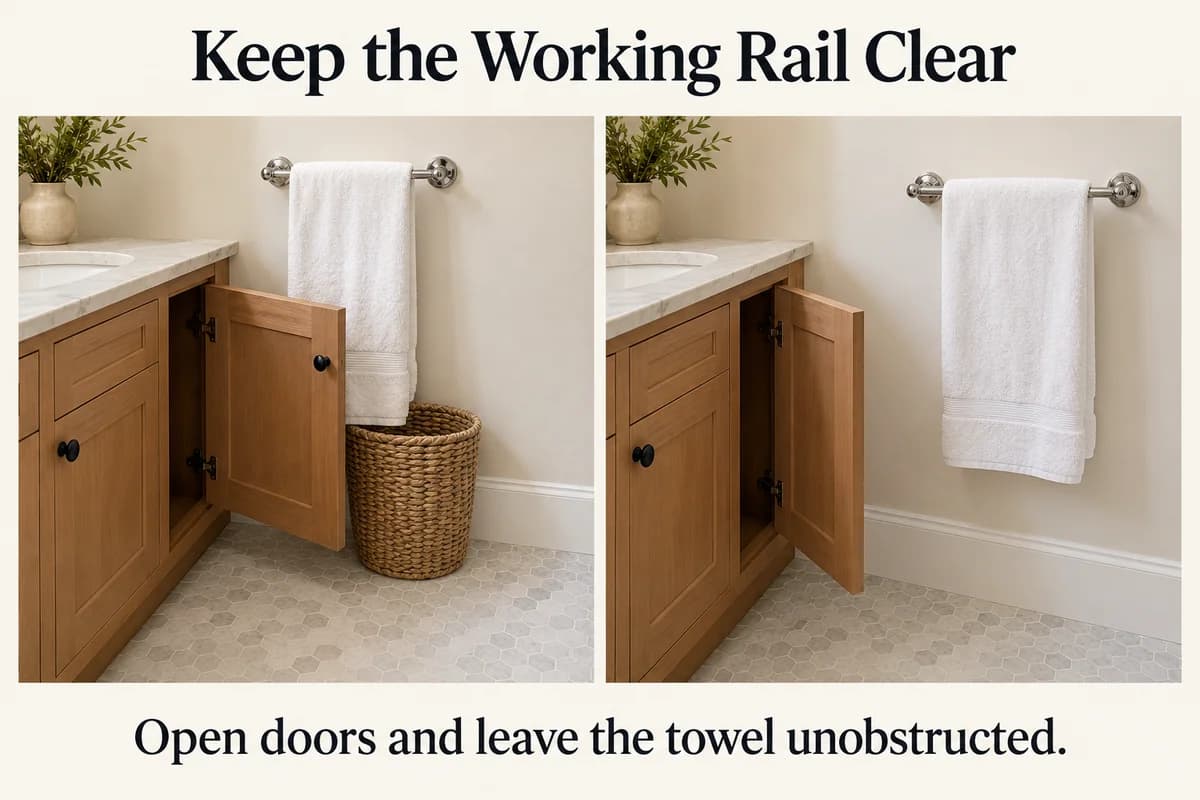
After installation, hang the towel wet enough to represent normal use and open the shower and cabinet doors through their full paths. If the fabric brushes a bin or counter, first remove or relocate the obstruction; if it remains crowded, change the towel fold or bar position. Keep a spare towel in the linen closet instead of loading every spare onto the working rail. The useful finished height is the one that still works during an ordinary busy morning.