The first cool morning can make a closet behave irrationally. Suddenly every sandal is exiled and six heavy sweaters are standing by for a temperature that will not arrive until November.
Zone one: wear now
Keep the pieces that suit the actual afternoon: T-shirts, light trousers, button-downs, fluid skirts and dresses. These are not summer leftovers when they still form the base of a fall outfit.
Move them to one visible section. The point is not to preserve the entire warm-weather wardrobe. It is to stop packing away the exact white shirt you will want beneath a blazer. Our white button-down guide shows six ways that piece can keep working.
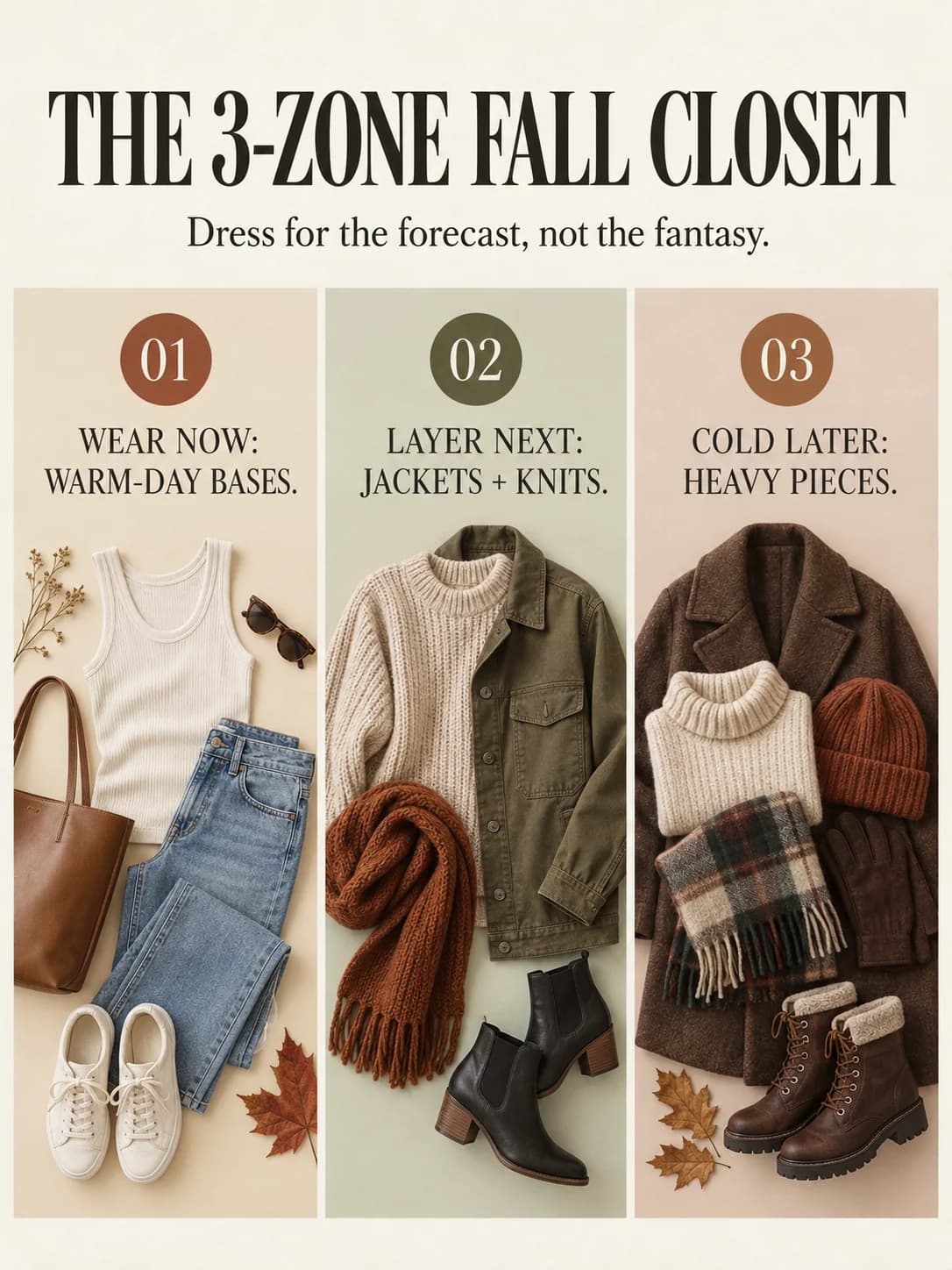
| Zone | What belongs | Next action |
|---|---|---|
| Wear now | T-shirts, light trousers, dresses | Keep at eye level |
| Layer next | Cardigans, blazers, trenches, boots | Build five outfits |
| Cold later | Heavy coats, thick knits, thermal pieces | Clean and stage nearby |
Zone two: layer next
Place cardigans, light jackets, trenches, sweater vests and closed shoes within easy reach. Then make five complete outfits using the zone-one bases. Do not count a jacket as useful because it looks excellent on its hanger. Button it over the shirt. Sit in it. Check the sleeve length.
The sweater-vest guide is useful here because a vest adds warmth without committing the whole outfit to a thick sleeve.
Zone three: cold later
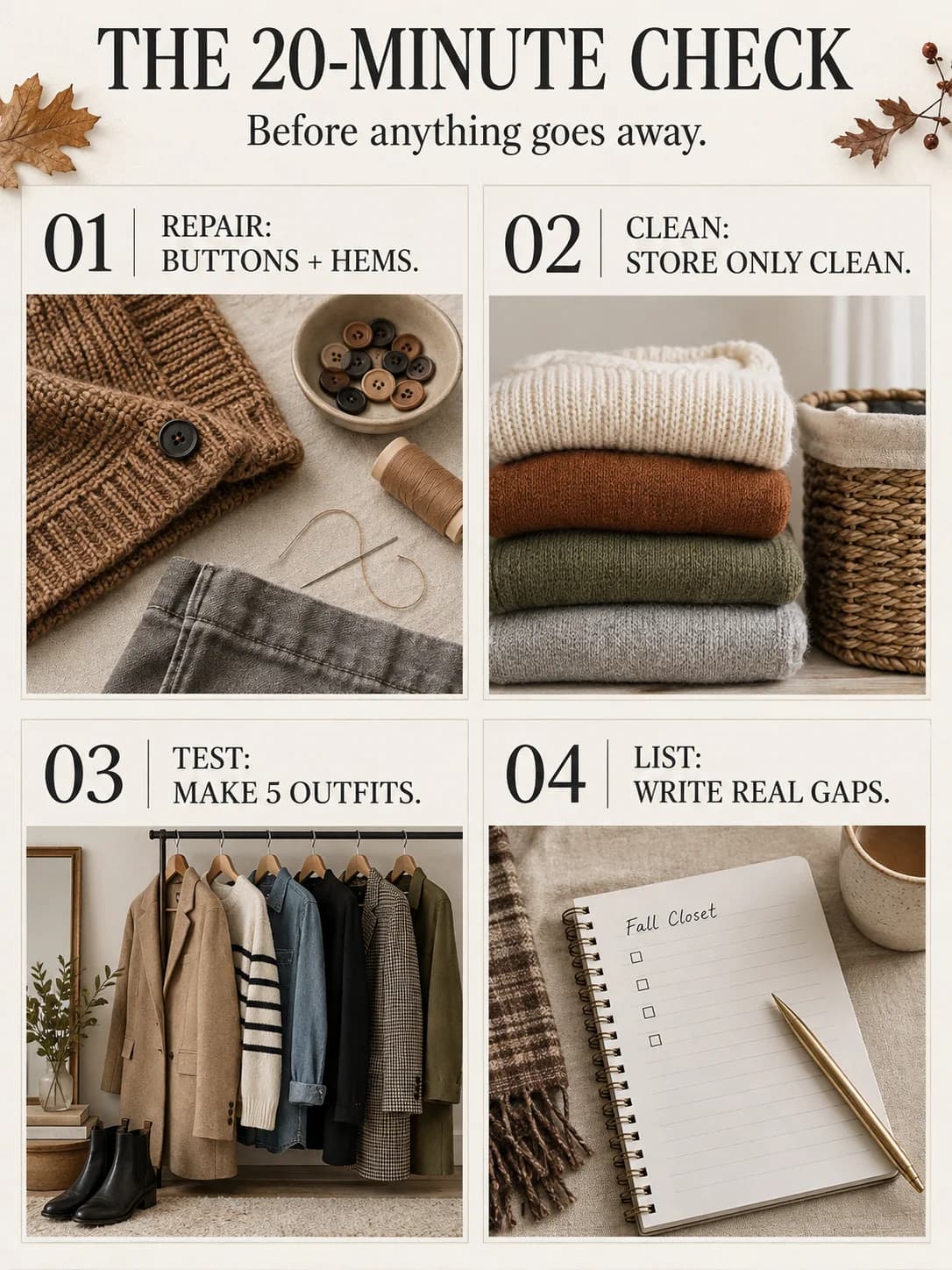
Heavy coats, thermal layers and the thickest knits can wait nearby rather than taking over prime closet space. Store them clean. Check for loose buttons, pilling and damaged hems now, when a repair does not have to happen forty minutes before dinner.
Use the repair basket as an honest fourth zone
Anything that needs tailoring, cleaning or shoe work goes into one visible basket with a deadline. A broken zipper hidden behind good intentions is not seasonal storage. It is a future surprise.
Write the shopping list last
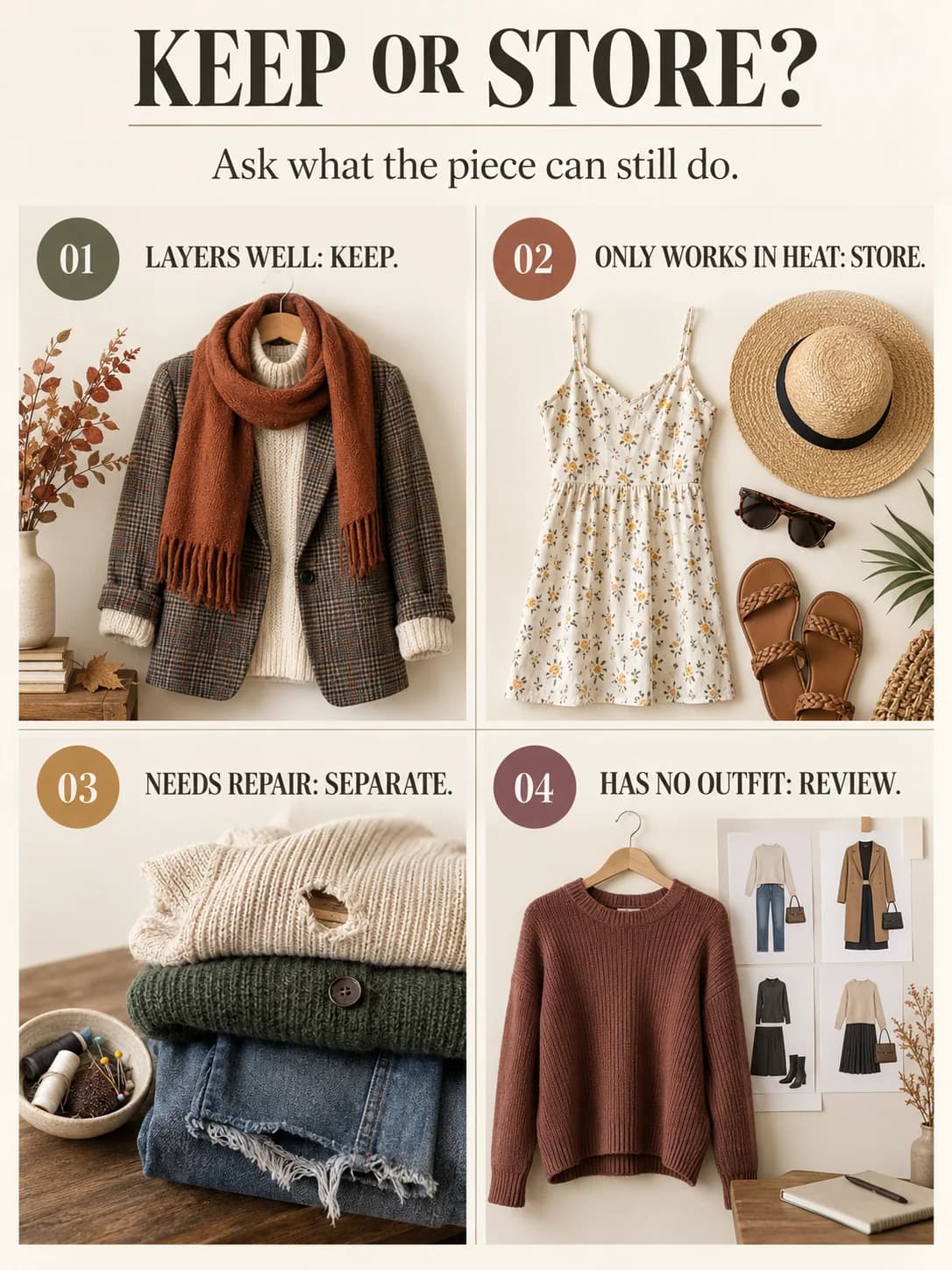
After five outfit tests, note the actual friction. Perhaps the closet needs one weatherproof shoe, not four new sweaters. Perhaps every layer works but none fits under the coat. Perhaps a monochrome base would make the existing jackets easier; the monochrome guide can help test that without buying another color story.
Keep one transition rail for two weeks
If space allows, reserve a short rail or shelf for the pieces moving between zones. A dress that works with bare legs now may work with boots and a jacket next month. Seeing those bridge pieces together prevents the closet from splitting into “summer” and “winter” before the weather has made up its mind.
Photograph the five tested outfits so the useful combinations survive the next hurried morning.
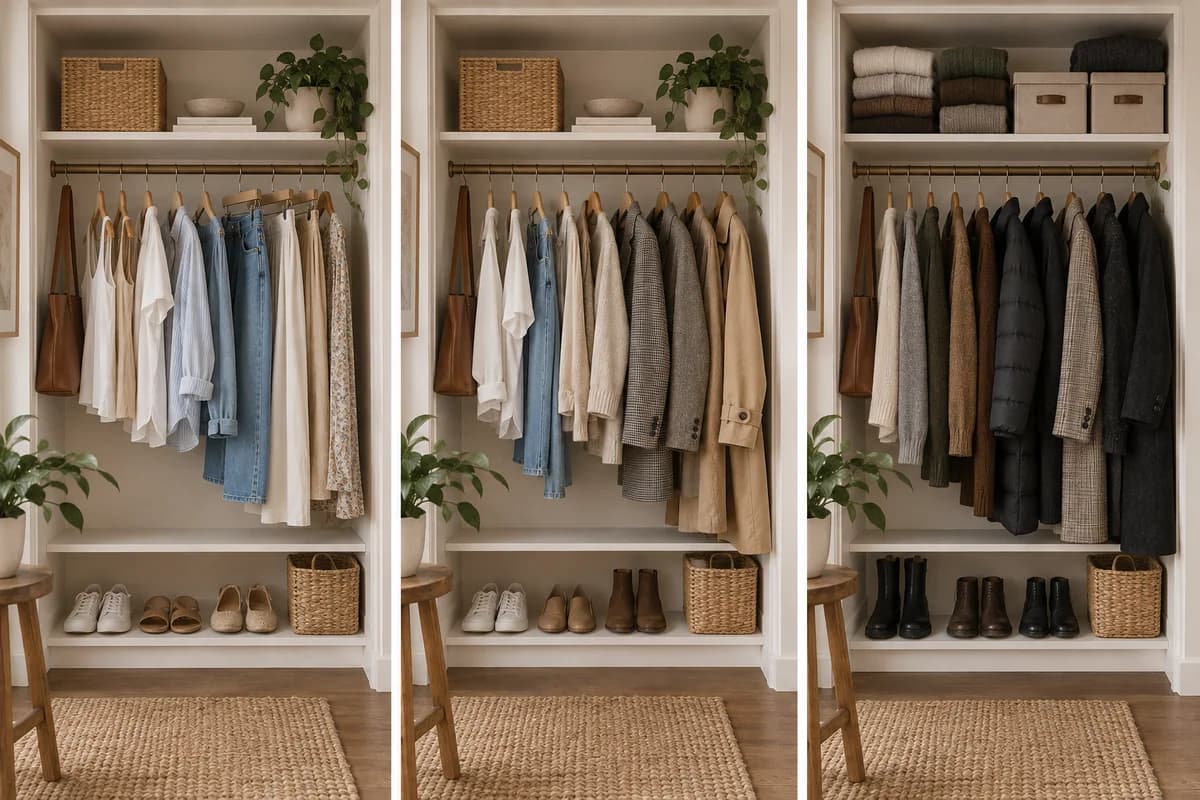
The transition is complete when getting dressed matches the weather with minimal rummaging. It does not need a reveal, matching hangers or a ceremonial farewell to linen.
Frequently asked questions
When should you switch your closet for fall?
Use your local forecast rather than a calendar date. Begin when mornings and evenings regularly need a layer, but keep warm-day pieces accessible during transitional weeks.
What summer clothes can stay for fall?
T-shirts, tanks, button-downs, fluid skirts and dresses can remain if they layer comfortably under jackets, knits or boots.
Should you buy fall clothes before organizing?
Organize and test outfits first. The process reveals actual gaps, such as a missing rain layer or shoe repair, instead of creating a speculative shopping list.